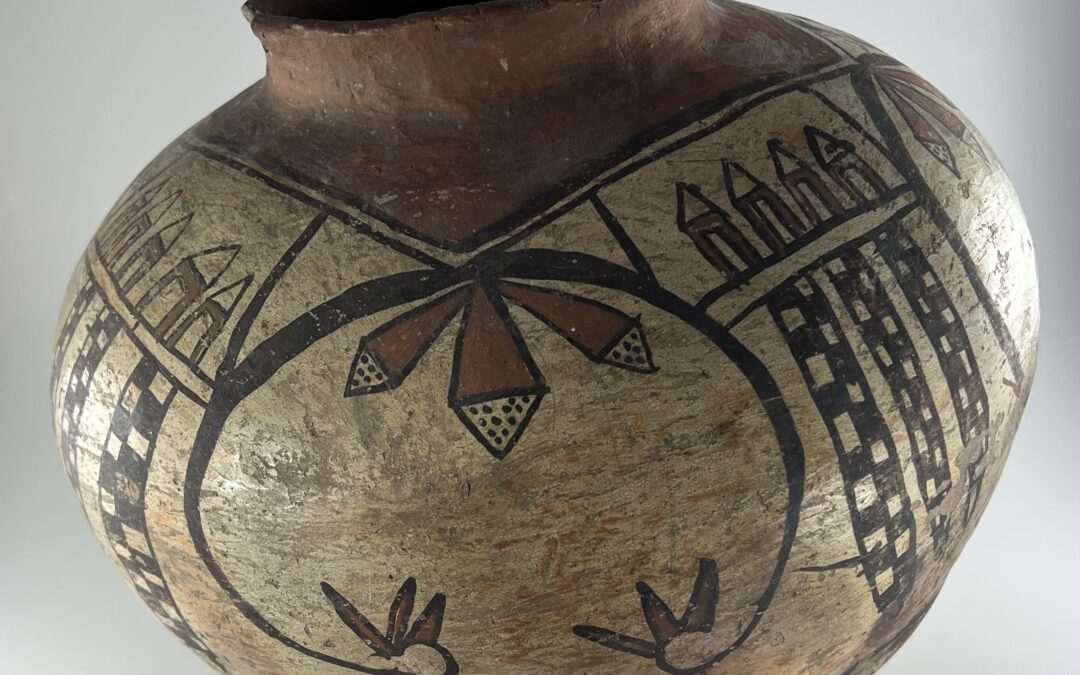
1880s to 1900 Transition Ware, Eagle Tail Design, Polacca Ware, White-slipped, Nampeyo
The neck is about 1.0-inch high. This rather worn and crudely-painted pot turns out to be a gold mine of information, but learning its story requires an extended investigation and discussion. As a result of these discussions I can say with high confidence that jar...
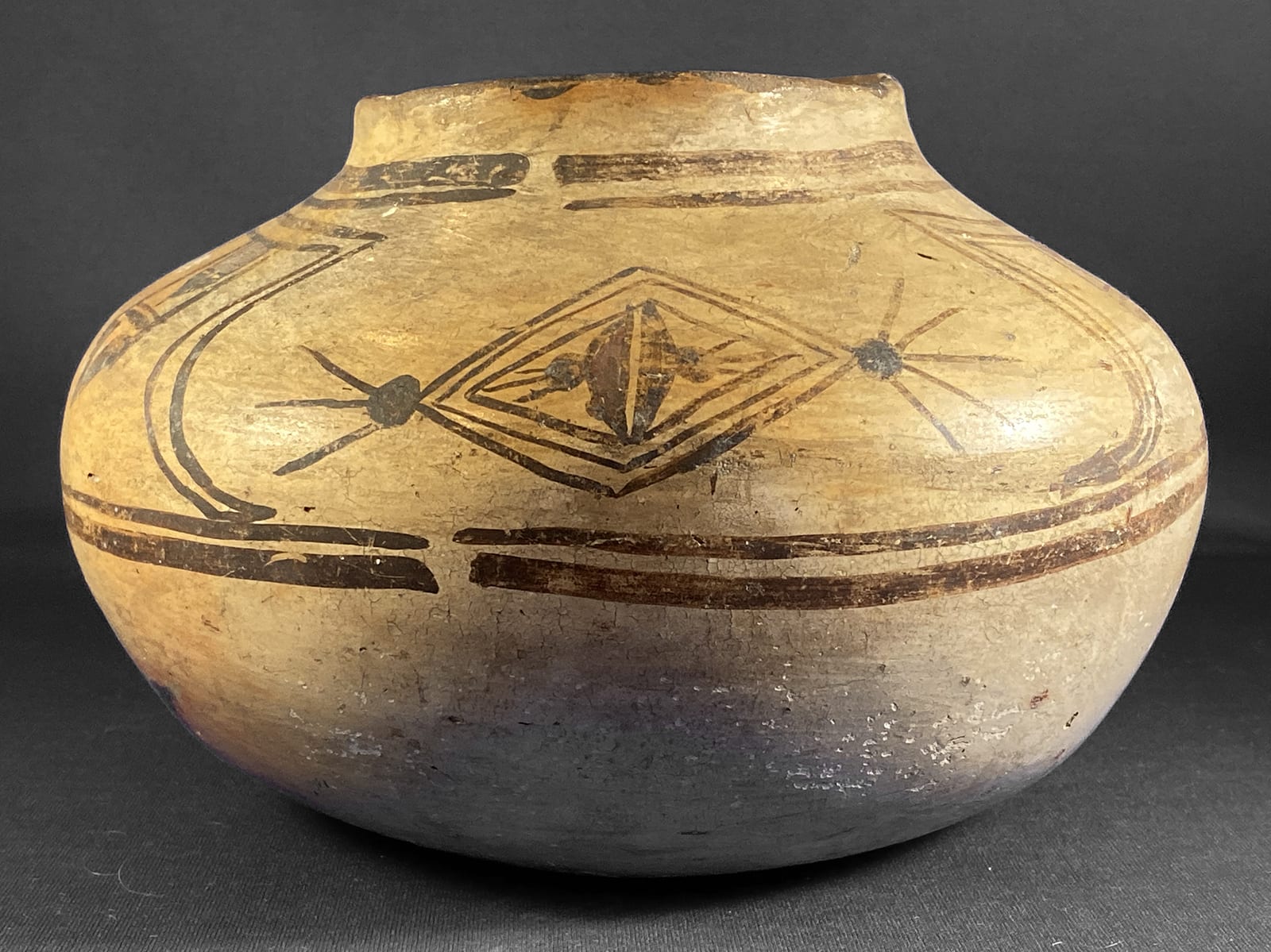
1880s to 1900 Transition Ware, Eagle Tail Design, Polacca Ware
The iconic Nampeyo pot is a Sikyatki Revival low-shouldered jar with her eagle-tail design. This collection contains such a pot (2005-16) dating from about 1905. So identified is this design with Nampeyo that the pot is recognizable as “by Nampeyo” from...
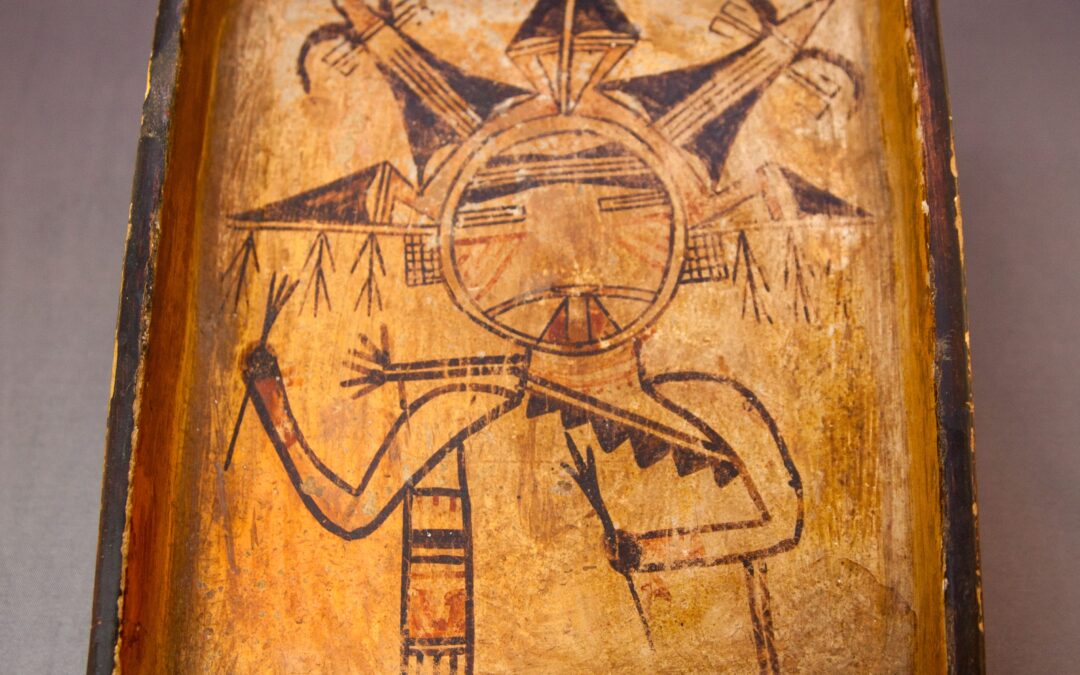
1880s to 1900 Transition Ware, Kachina Design, Polacca Ware, Polik'Mana, White-slipped, Nampeyo
The two rectangular vessels in the collection This “tray” is really a painted tile surrounded by a 1.6-inch high wall. If it were only a tile, it would likely be one of the largest Nampeyo tiles known. One prehistoric example of this tray form is documented. Based on...
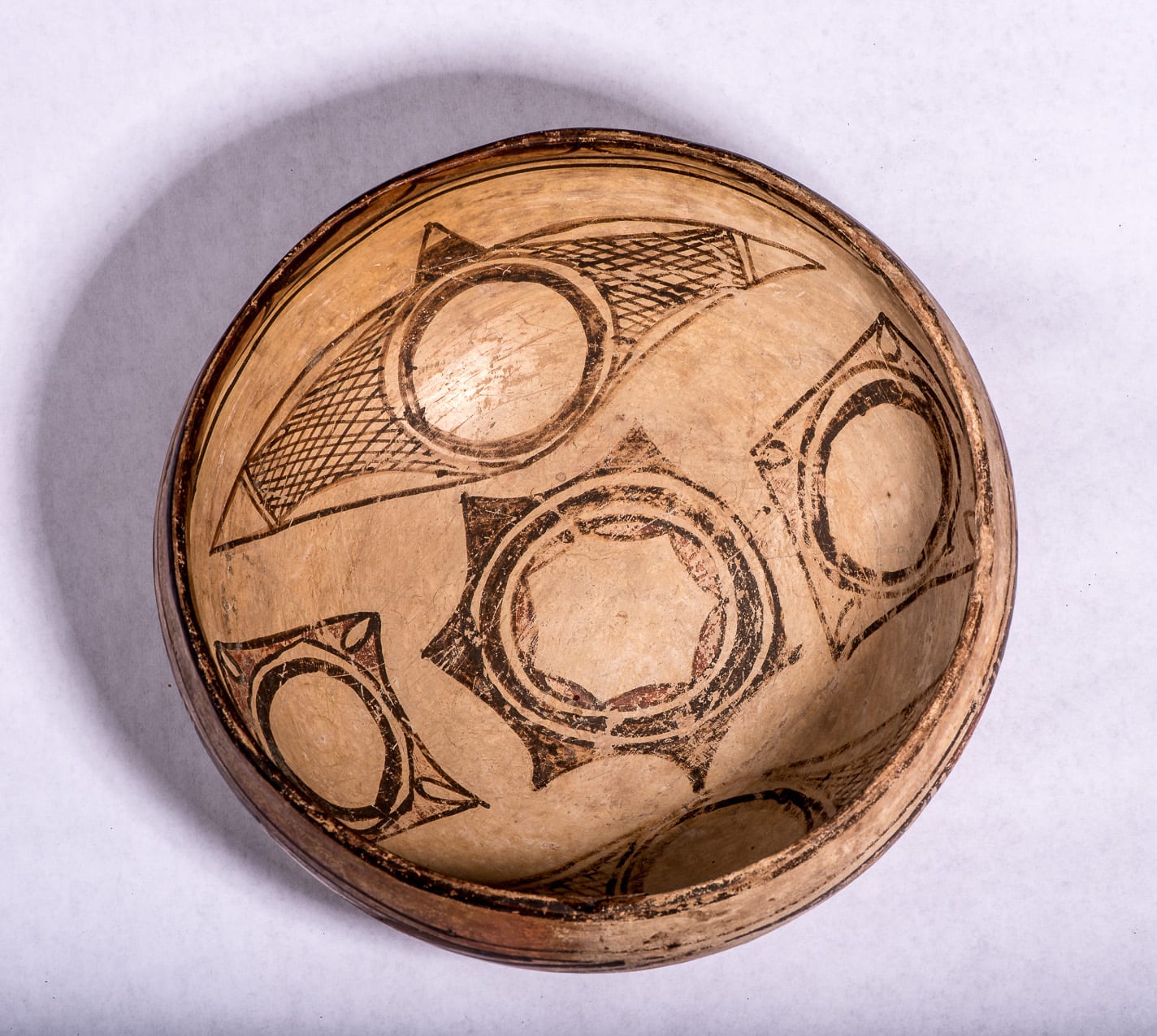
1880s to 1900 Transition Ware, Polacca Ware, Utility Pots
This is a thick, solid bowl with a rim that incurves about one-fifth of an inch. Without penetrating to the interior, a 1-inch chunk has been knocked off one side, revealing coarse grey/pink clay that forms the body of the vessel. The bowl is covered with a white slip...
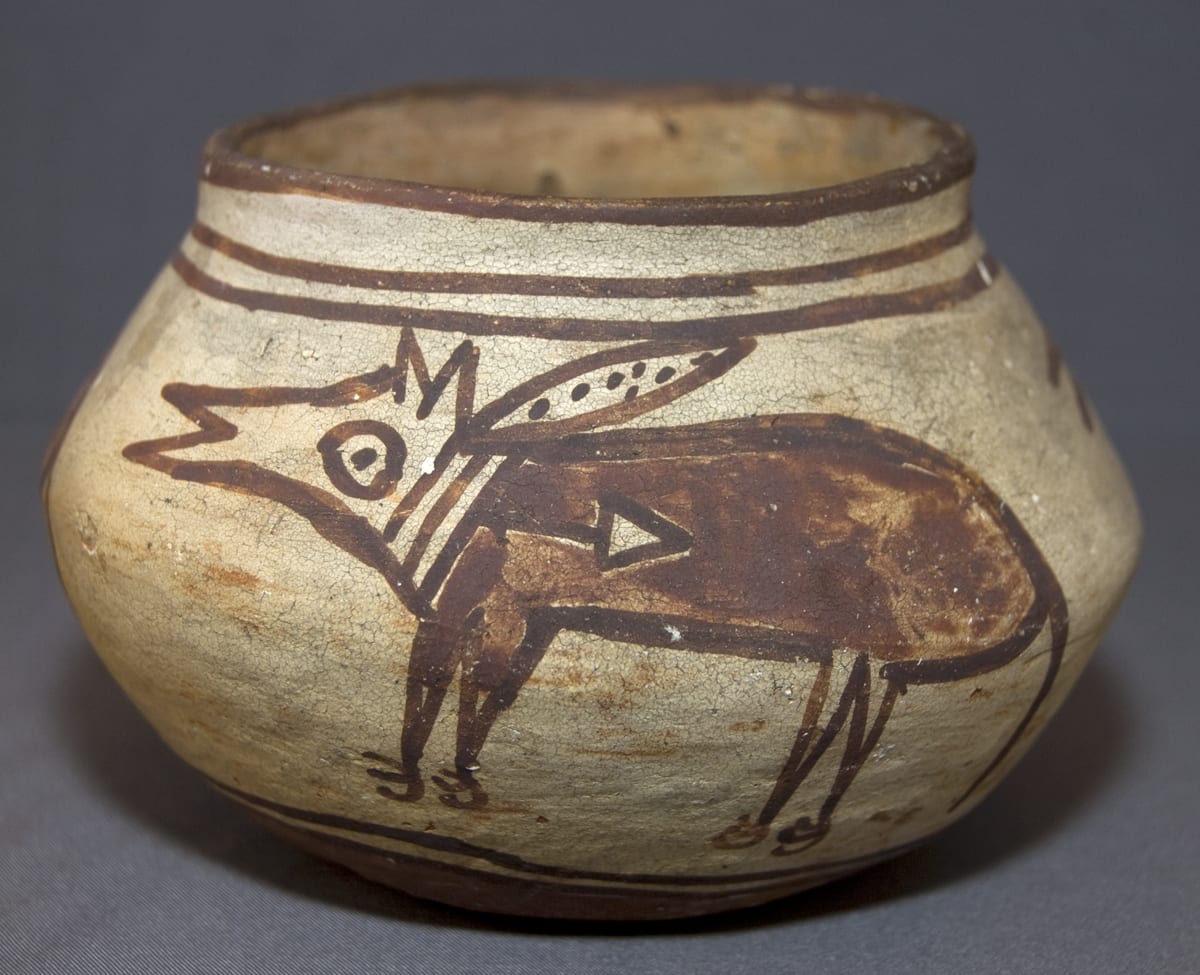
1880s to 1900 Transition Ware, Folk Art Other Animal Design, Polacca Ware
3.375” h X 5.25” w Dating “to around 1880 and likely a Keam innovation,” the engaging creatures on this pot represent an early attempt by Hopi (Hopi/Tewa) potters to create a product that would appeal to the tourist trade.” (Quoted comments from Ed...
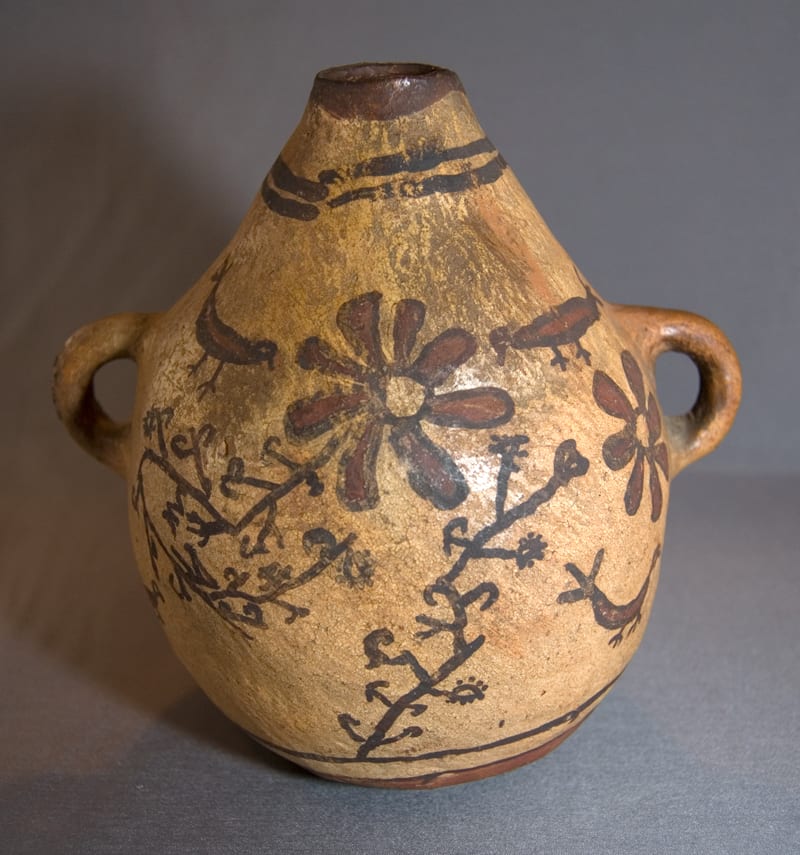
1880s to 1900 Transition Ware, Canteens, Folk Art Bird Design, Polacca Ware
Collected at Hopi ca 1879 According to Wade and McChesney, vertical Polacca canteens of this form are derived from the older San Bernardo tradition (1981:569). The Keam collection contains examples of such San Bernardo canteens (1981:73) and similar Polacca B vessels...