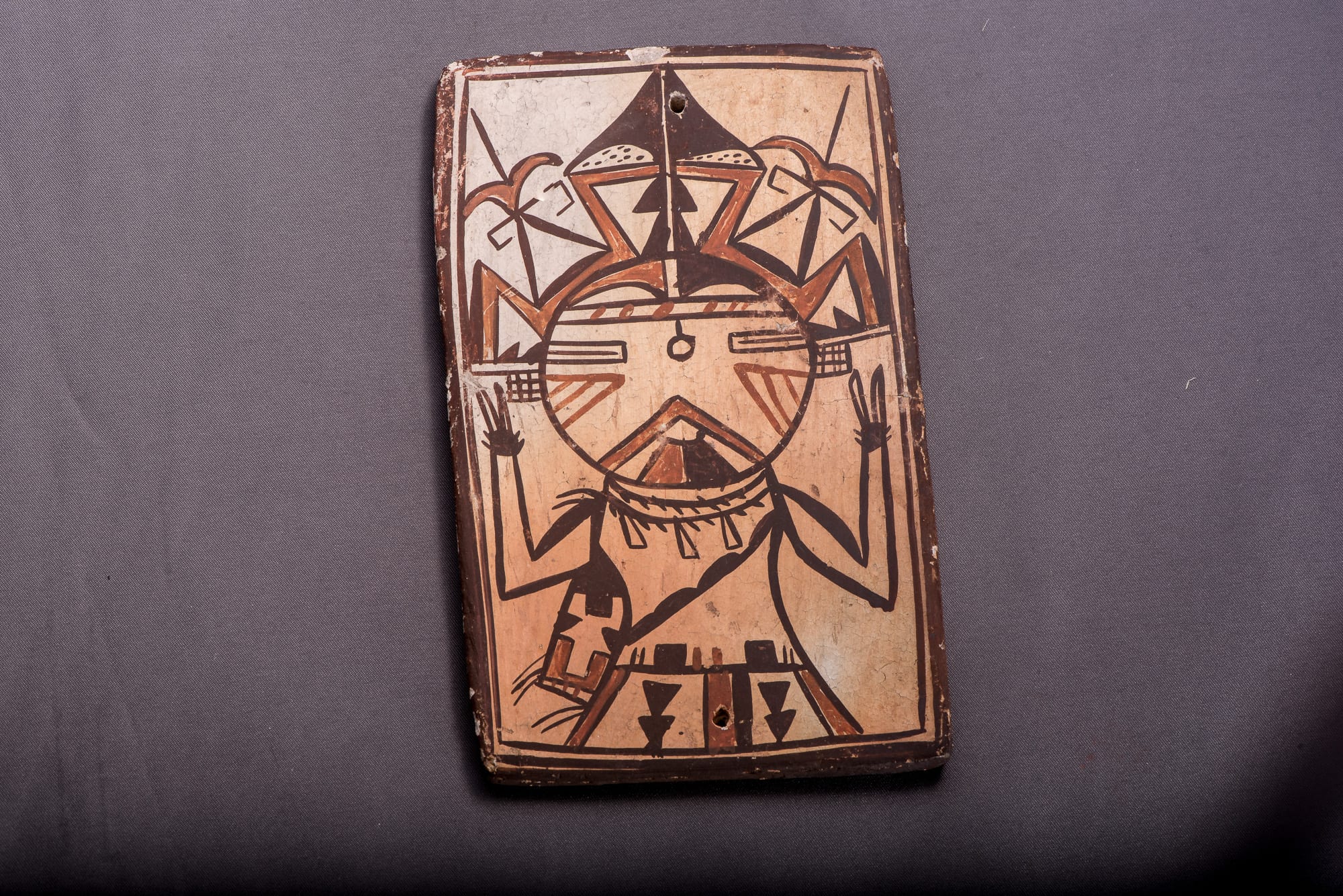
1880s to 1900 Transition Ware, Kachina Design, Polik'Mana, Tile, White-slipped, Nampeyo
Form: Since prehistoric times Hopi women formed flat “tiles” of clay that were fired and then ground to use as temper in the formation of pots. Some decorated tiles may have been made for ritual use in the kivas (Wright, 1977:64). In 1875 Thomas Keam opened the first...
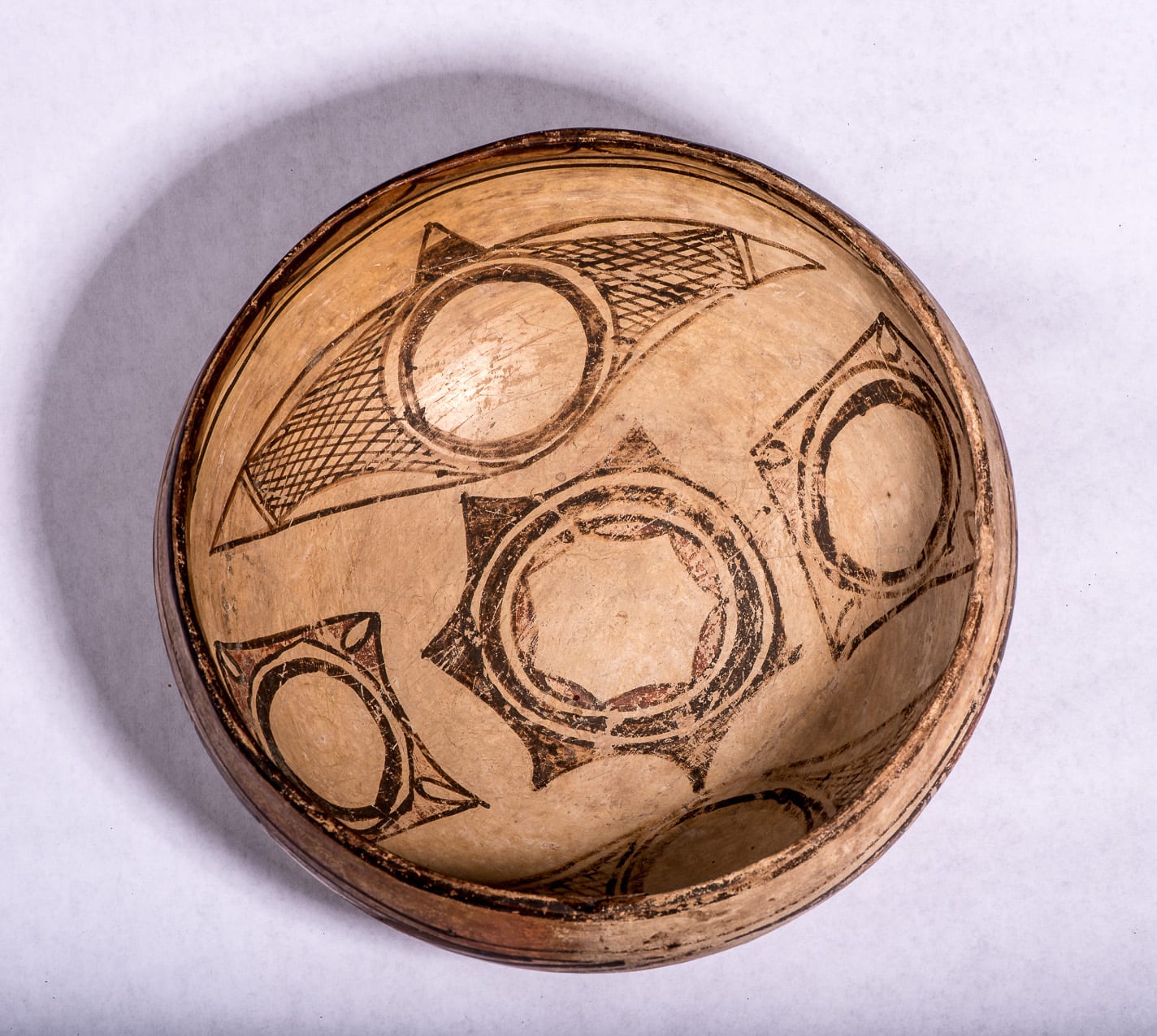
1880s to 1900 Transition Ware, Polacca Ware, Utility Pots
This is a thick, solid bowl with a rim that incurves about one-fifth of an inch. Without penetrating to the interior, a 1-inch chunk has been knocked off one side, revealing coarse grey/pink clay that forms the body of the vessel. The bowl is covered with a white slip...
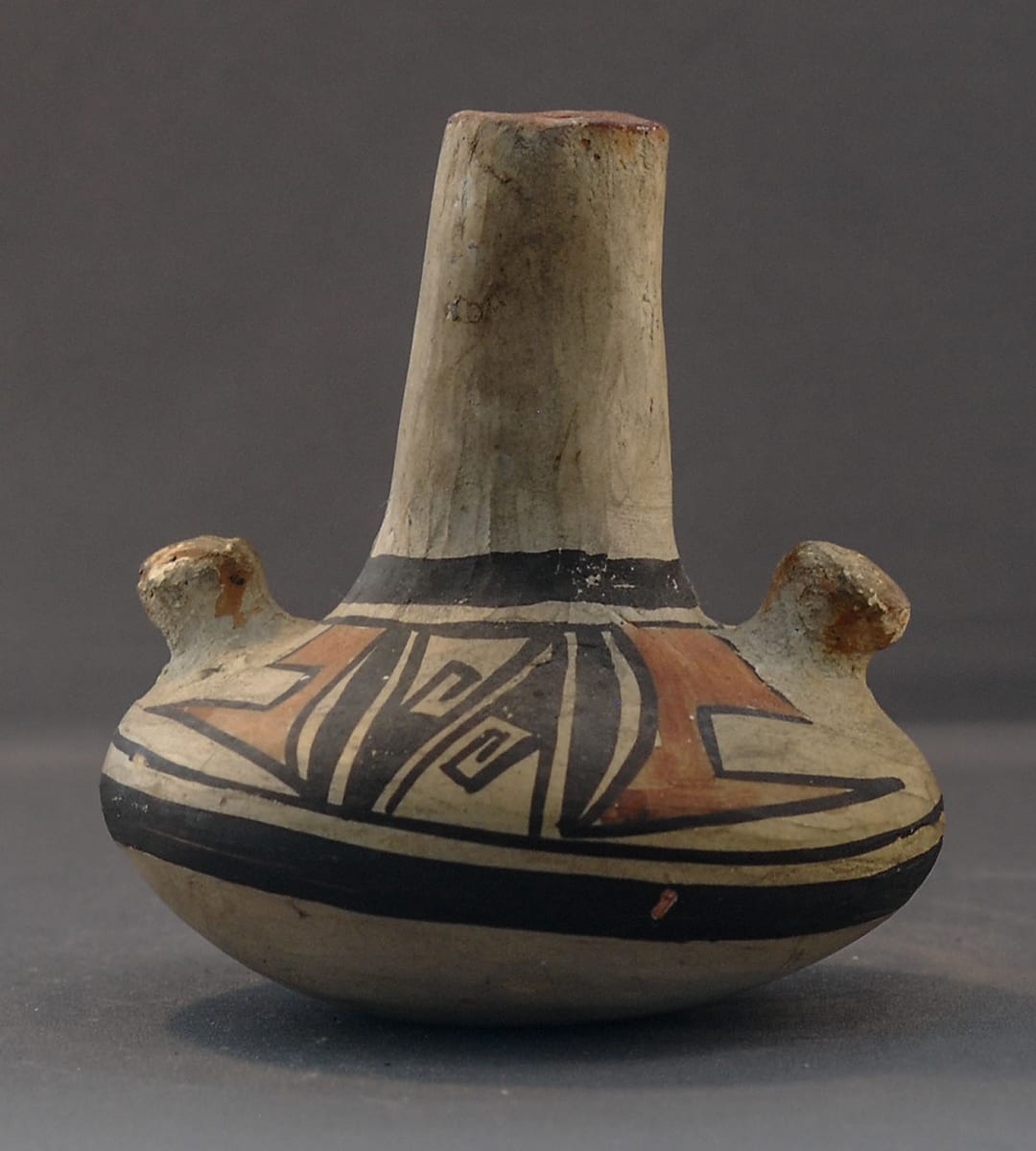
1880s to 1900 Transition Ware, Canteens
First People potters of the Southwest have long produced canteens necessary to carry drinking water to the cornfields. These utility canteens carry from several cups to a quart or more of water. (See “utility ware” in the Index of Categories for the variety of such...
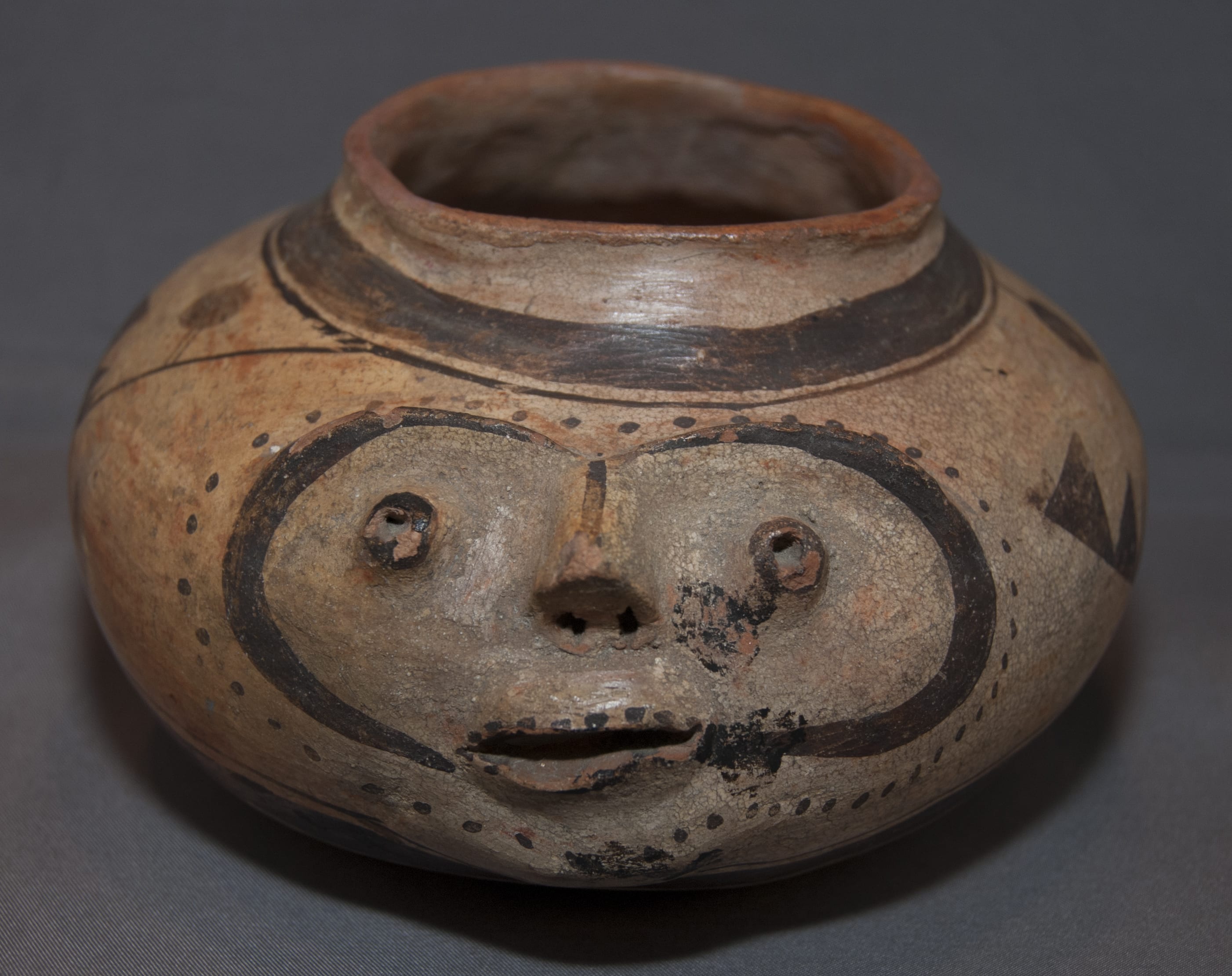
1880s to 1900 Transition Ware, Effigy
Except for the red rim typical of Polacca “C” and “D” ware, the jar is monochromatic; the white slip with small crackles is also characteristic of such ware. Either the pot has been lightly varnished or there is a noticeable patina on the pot: It’s hard to...
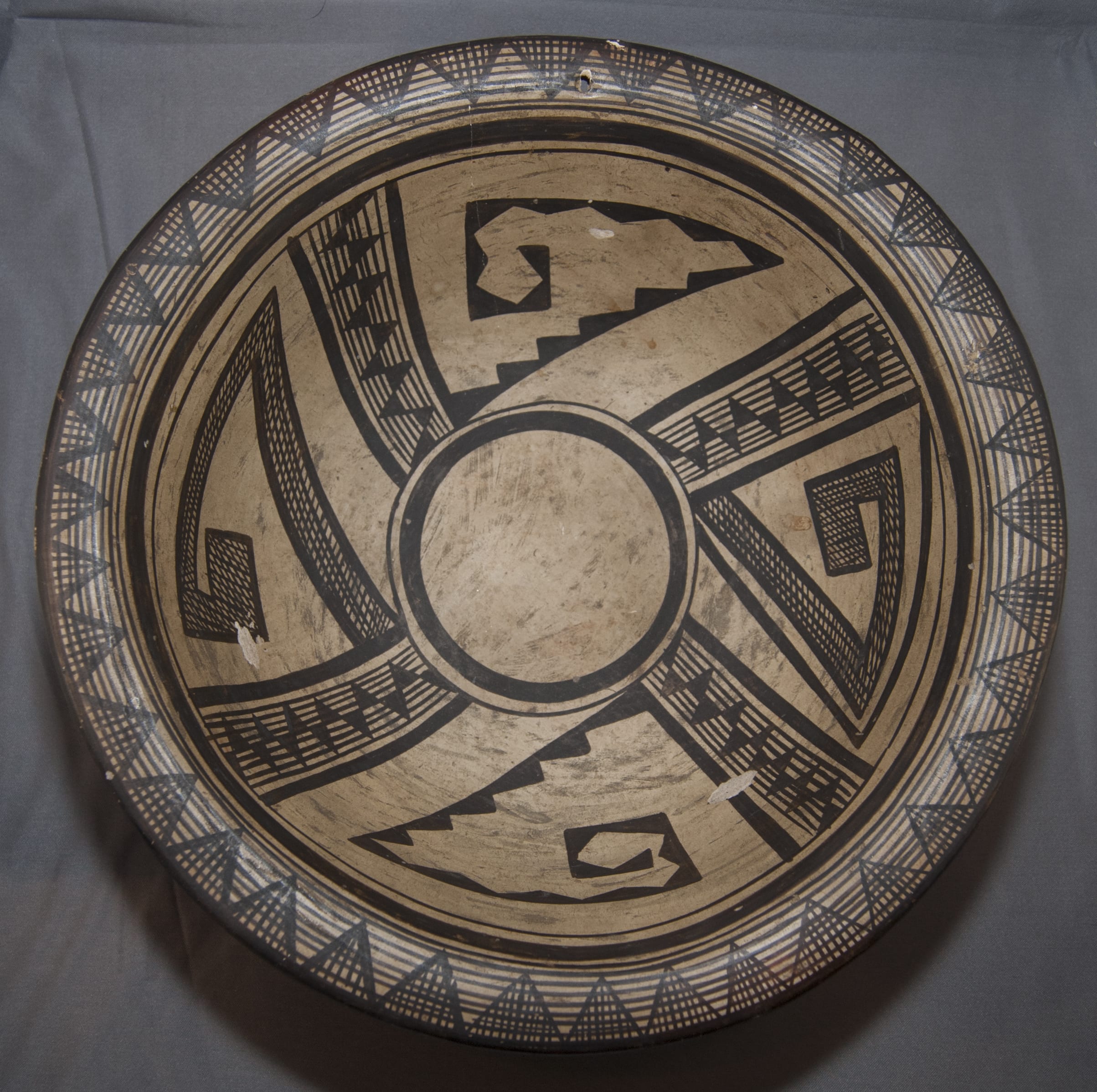
1880s to 1900 Transition Ware, White-slipped, Nampeyo
Formed ca. 1895-1900, this bowl has an unusual form, an unusual slip, an unusual design and unusually complete provenance. It is one of three known examples of pottery of this shape and design by Nampeyo. There is a well-known posed photograph of Nampeyo and Annie by...
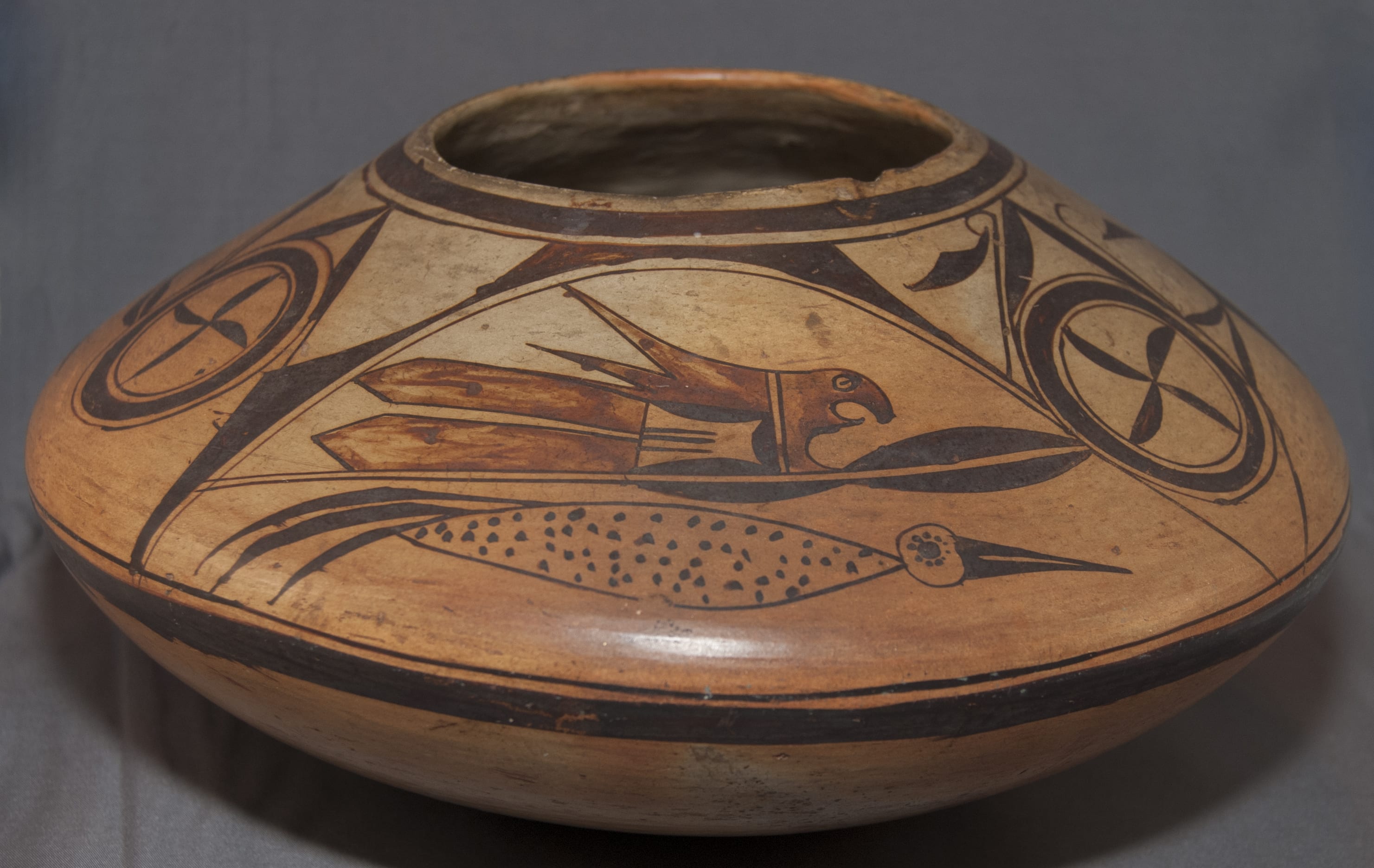
1880s to 1900 Transition Ware, Folk Art Bird Design
This is a Hopi pot, made of Hopi clay using Sikyatki Revival form and techniques and probably made at First Mesa about 1900-1905. However the design has strong Zuni elements. The iconography is full of spirit, motion and humor – a classic piece of American folk art. A...