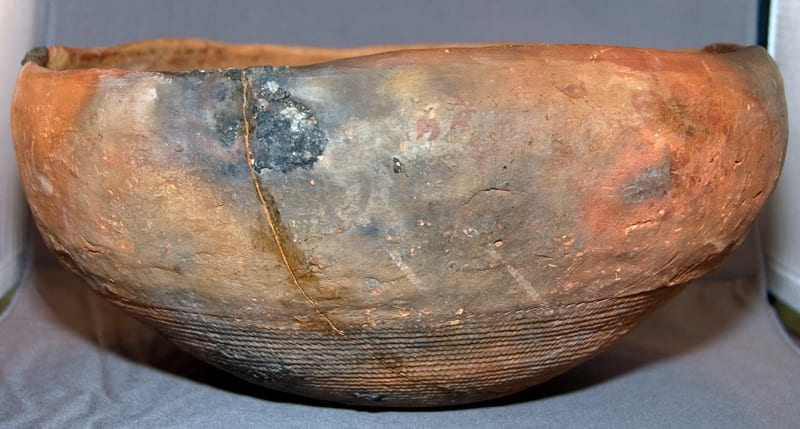
1880s to 1900 Transition Ware, Utility Pots
The bowl has an outside radius of 10 inches. The bottom 6 inches were formed in a basket; the remaining 4 inches were added with clay coils. The basket had about 30 coils. The edge coil of the basket was finished with a toothed edge forming small triangles whose...
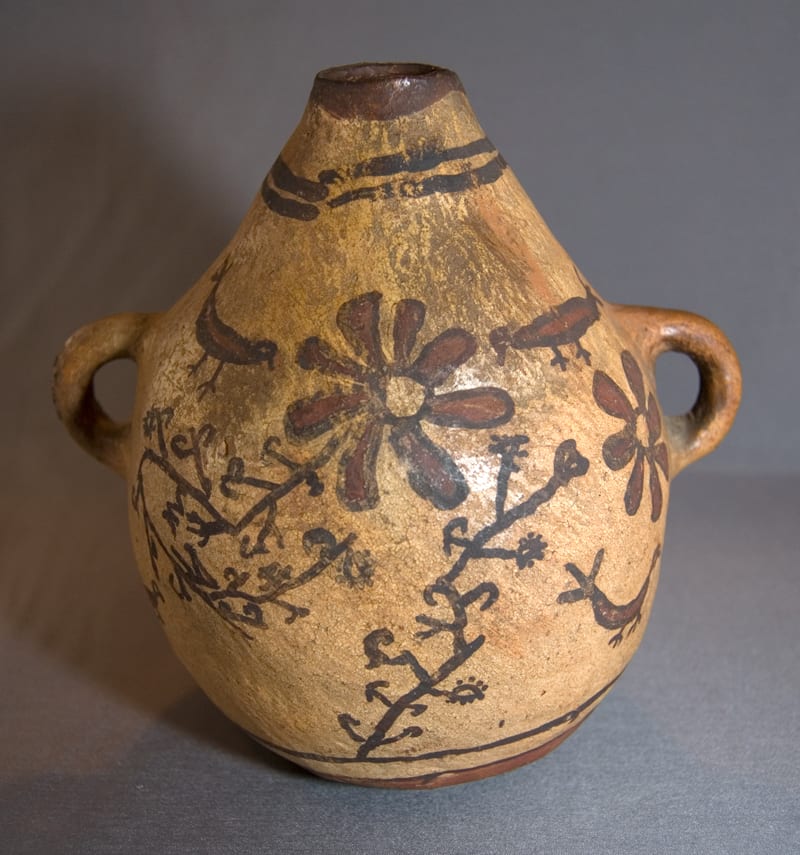
1880s to 1900 Transition Ware, Canteens, Folk Art Bird Design, Polacca Ware
Collected at Hopi ca 1879 According to Wade and McChesney, vertical Polacca canteens of this form are derived from the older San Bernardo tradition (1981:569). The Keam collection contains examples of such San Bernardo canteens (1981:73) and similar Polacca B vessels...
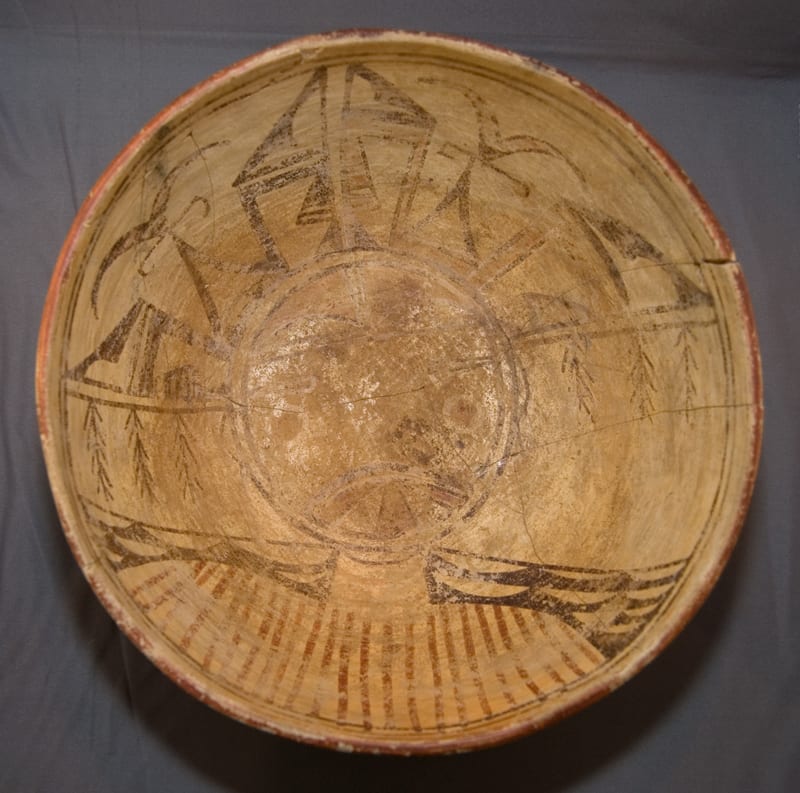
1880s to 1900 Transition Ware, Kachina Design, Polik'Mana, Utility Pots, White-slipped, Nampeyo
Walpi Polychrome Piki Bowl (repaired) with Pahlik Mana interior by Nampeyo, circa 1890. “Broken and glued with no additional plaster or overpainting. There is extensive ethnographic wear to the interior painted design from extended use as a piki bowl. The bowl bears a...
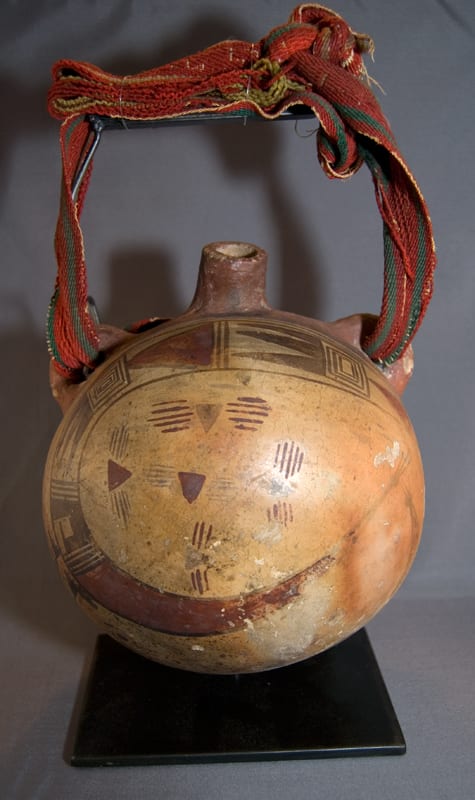
1880s to 1900 Transition Ware, Canteens
Hopi-Tewa Sikyatki Revival canteen by Nampeyo with a worn design from long-term use and attached worn Germantown sash, ca 1900-1905. Photographs by A.C. Vroman (Webb & Weinstein, 1973) taken at about the date that 2009-10 was made show the interior on Nampeyo’s...
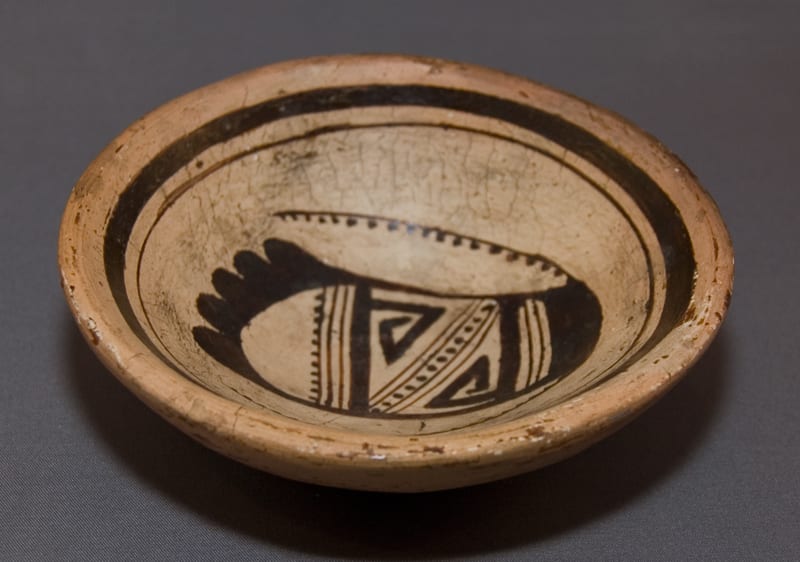
1880s to 1900 Transition Ware, Hand and Foot Design, Polacca Ware, White-slipped, Nampeyo
This small, unsigned pot has a classic Polacca crackled slip on the interior and is decorated with a monochromatic image of a foot with design elements that perhaps represent migration paths. (Note: A Pahana’s interpretation of the “meaning” of a design is dubious, at...
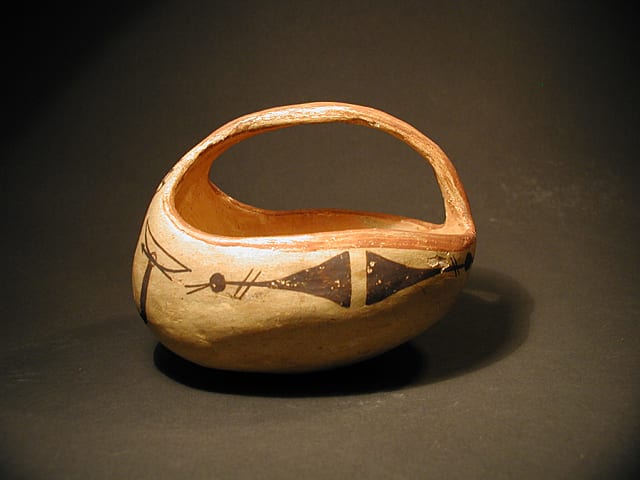
1880s to 1900 Transition Ware, Kachina Design, Polacca Ware, Utility Pots
Hopi Polacca D oblong bowl with handle crackled white finish, red rim, and handle. Dating from about 1890, this is probably a cornmeal pot used by villagers who circle around dancing kachinas in the public plaza of a Hopi/Hopi-Tewa village and bless the kachinas with...