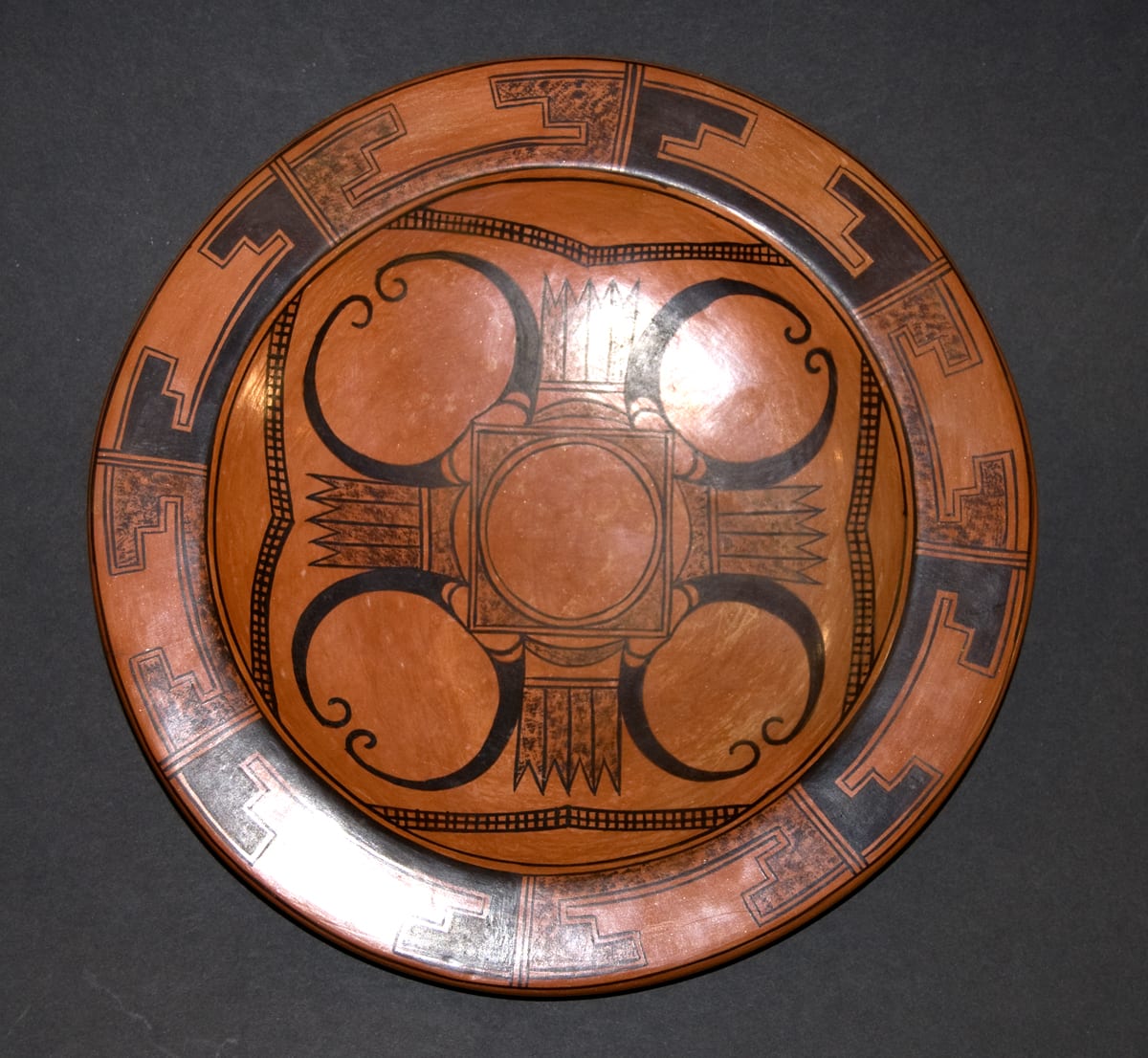
Eagle Tail Design
The design is a reproduction of the cover image of the catalog Historic Hopi Ceramics: The Thomas Keam Collection, by Wade and McChesney (1981). The cover image, in turn, is the linear projection of the design on two Polacca Polychrome Style D Revival pots...
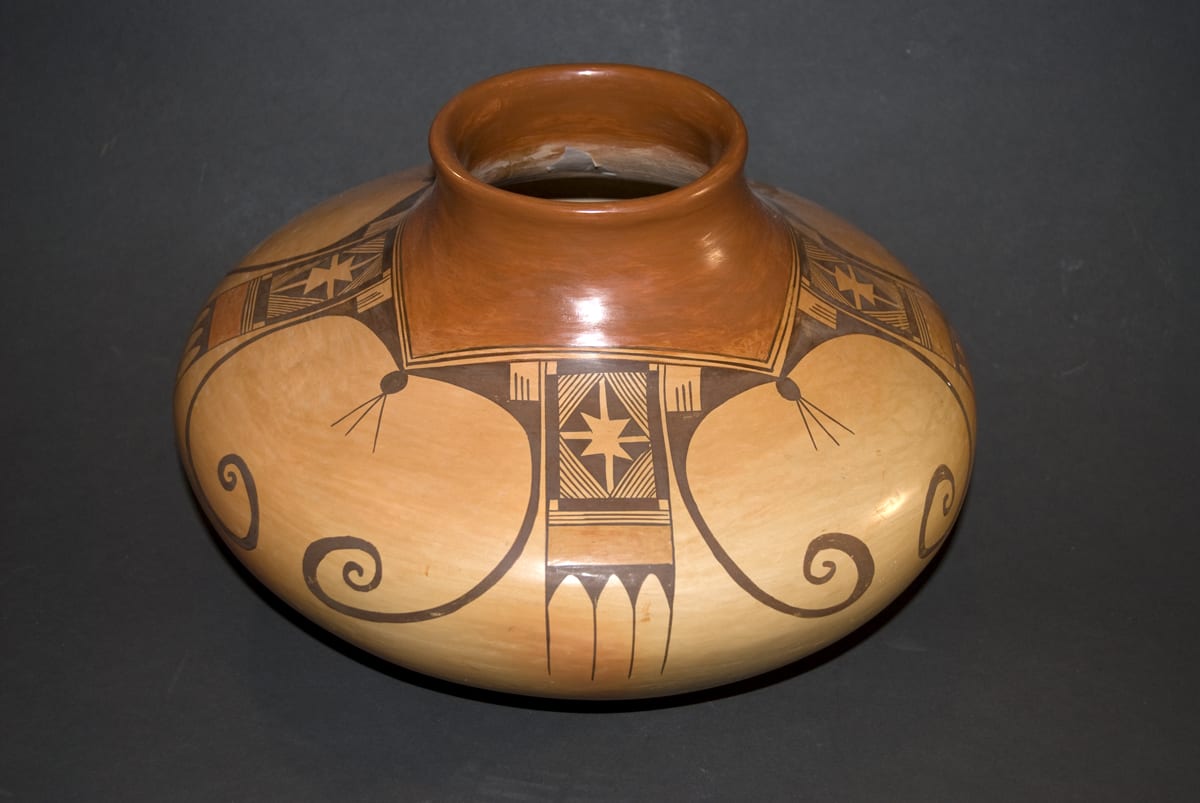
Eagle Tail Design
The signature on the bottom is faded and the pot listing garbled the signature with the comment “Signed for Osuana Nampeyo.” My sense was that it is signed “J Shamie Nampeyo,” with the “J” particularly difficult to read. On a visit to my home on 10/29/08, Rachel...
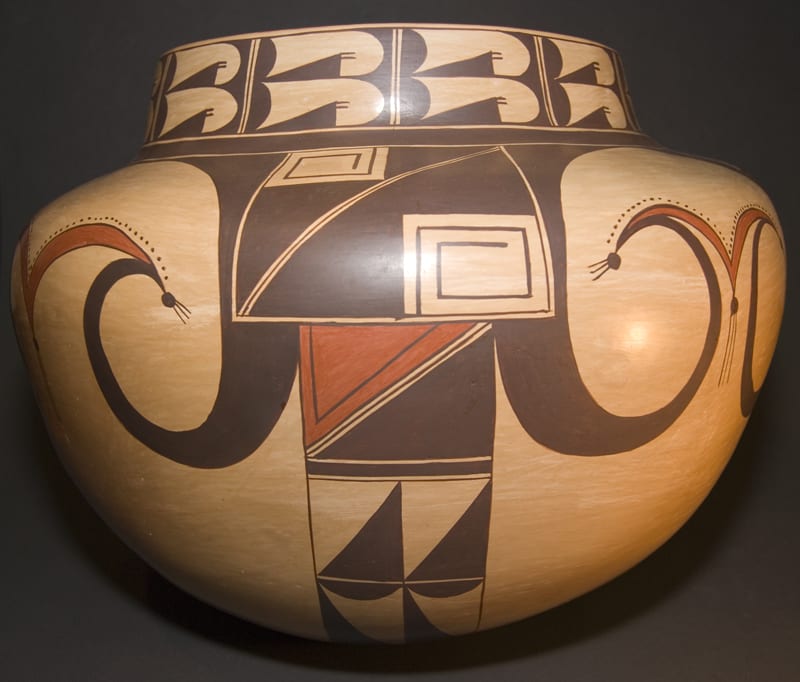
Eagle Tail Design
This huge Hopi-Tewa polychrome jar has a decorated rim and an eagle-tail design modified by the addition of elegant red swags between the curvilinear “feathers.” The pot is accurate both in size and in decoration to an “Old Lady” Nampeyo pot given on March 1, 1907 to...
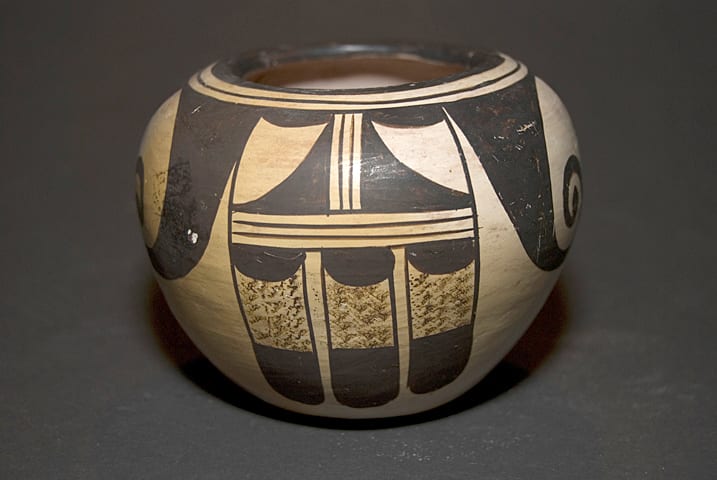
Eagle Tail Design
This jar is signed “Nampeyo/Fannie” and marked “1942” in pen. Apparently, Nampeyo formed it and her youngest daughter Fannie painted it. Nampeyo probably began potting when she was a teenager in the 1870s; her Sikyatki Revival style dates from the early 1880s and...
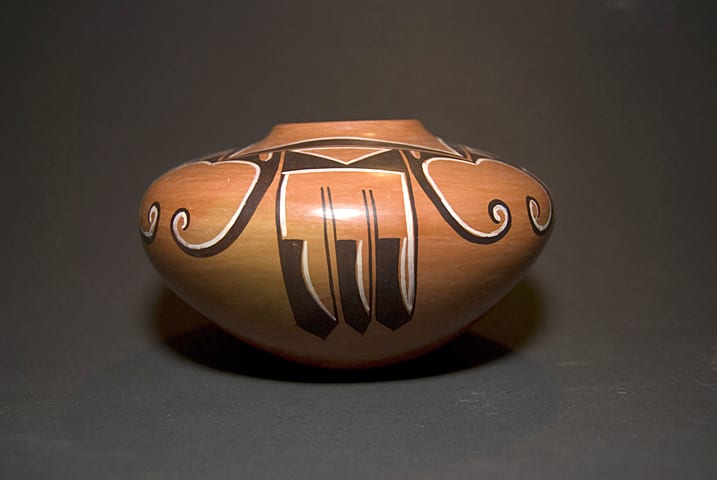
Eagle Tail Design
The clay body is made of a hard-to-work yellow clay called sikyatska, which, when fired, gives the pot an unusual orange-brown color. The pot has an extremely smooth finish and the black “eagle-feather” design is outlined in white (kaolin) clay. The pot was modeled...
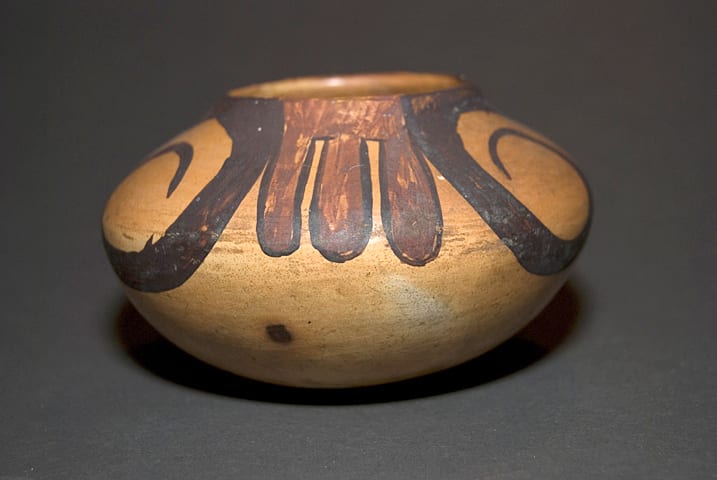
Eagle Tail Design
The splotchy red paint suggests a production date before 1930; I originally estimated 1910 to 1920. The Blairs (1999:92-93) point out that this eagle feather design is characteristic of Nampeyo’s work and is considered as “owned” by her family (as in Nampeyo’s seedpot...