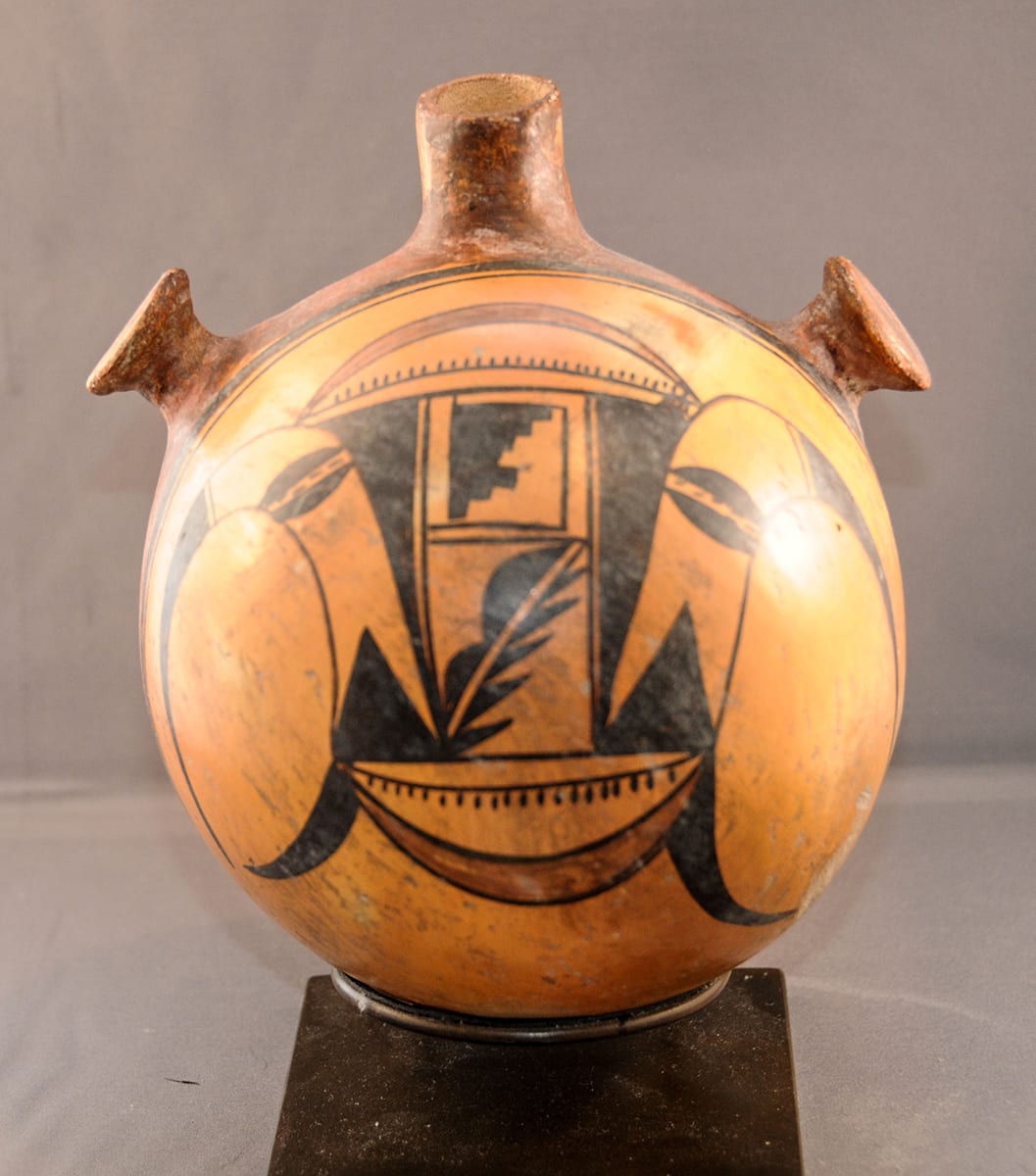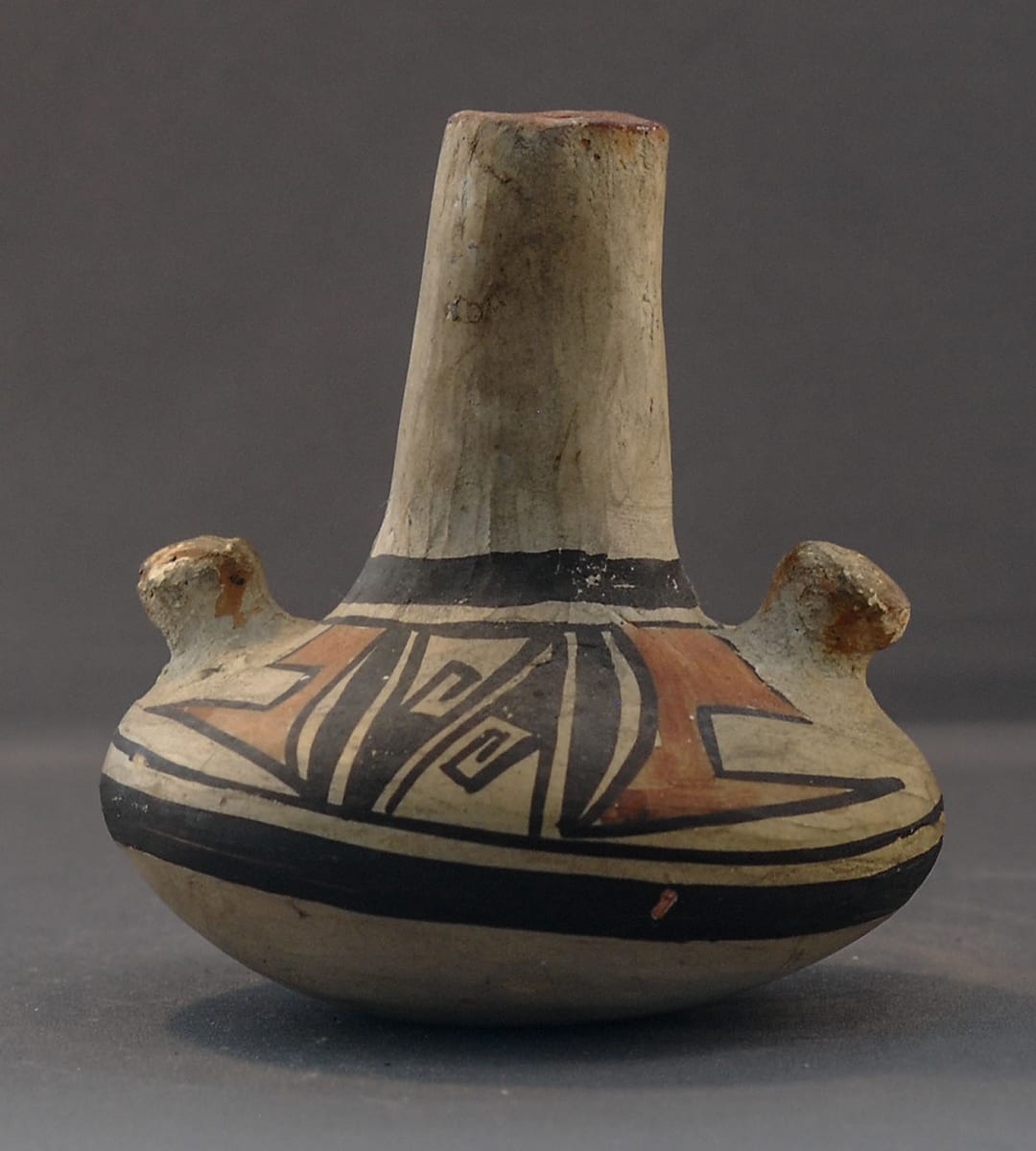
1880s to 1900 Transition Ware, Canteens
First People potters of the Southwest have long produced canteens necessary to carry drinking water to the cornfields. These utility canteens carry from several cups to a quart or more of water. (See “utility ware” in the Index of Categories for the variety of such...
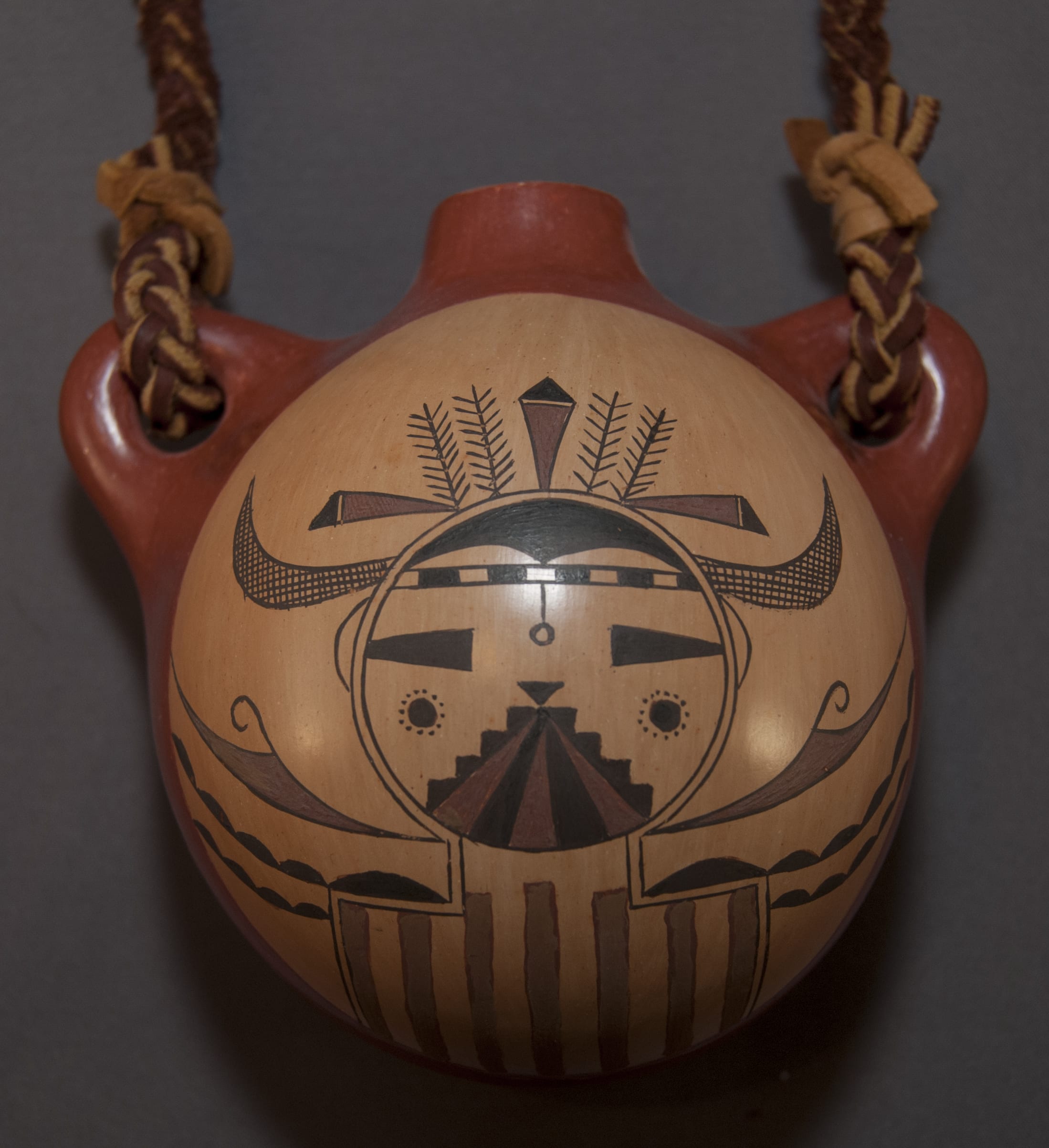
Canteens, Kachina Design, Polik'Mana
Beautifully formed and precisely polished and painted, this canteen is typical of the work of Loren Ami. Loren is a good representative of the creative energy unleashed at Hopi when it became acceptable for men to make pottery. The front third of the canteen is...
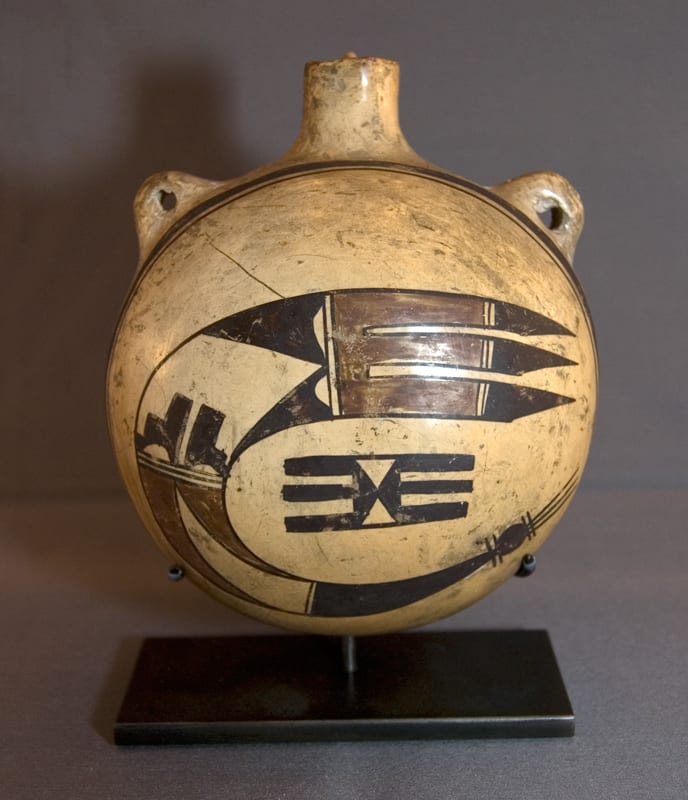
Bird Hanging from Sky Band Design, Canteens
Of the fifteen or so pots in the collection that were probably both made and painted by Nampeyo, this canteen, shallow dish 2002-03 and low-shouldered jar 2005-16 best represent the simple elegance that defines Nampeyo’s iconic style. The smooth white kaolin finish on...
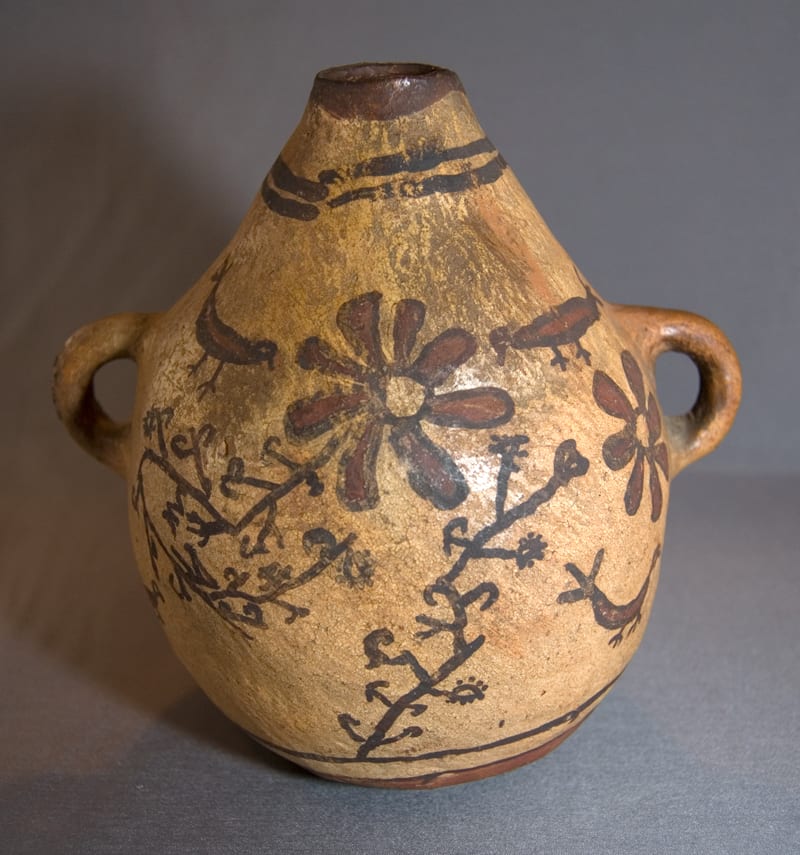
1880s to 1900 Transition Ware, Canteens, Folk Art Bird Design, Polacca Ware
Collected at Hopi ca 1879 According to Wade and McChesney, vertical Polacca canteens of this form are derived from the older San Bernardo tradition (1981:569). The Keam collection contains examples of such San Bernardo canteens (1981:73) and similar Polacca B vessels...
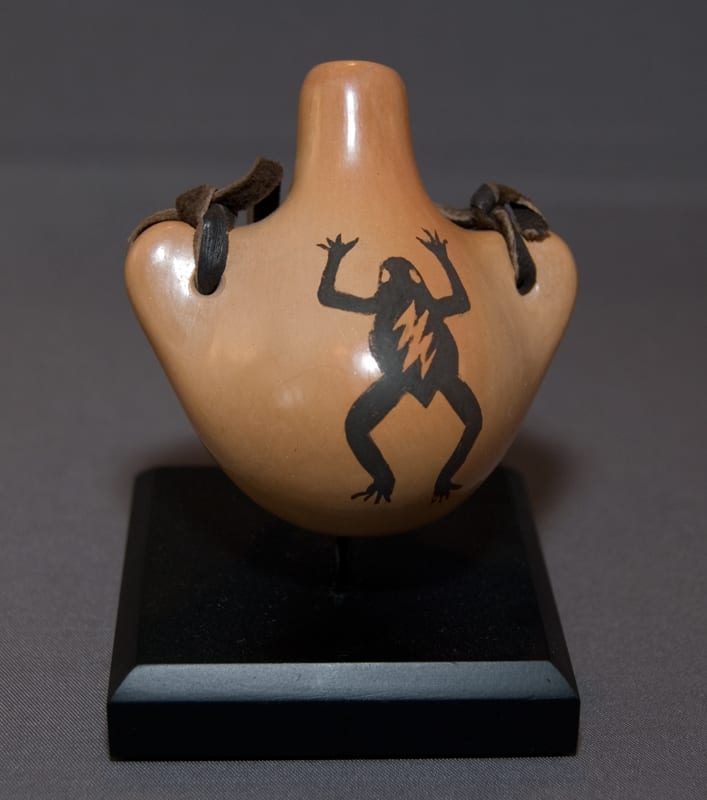
Canteens, Folk Art Other Animal Design
A frog is an appropriate decoration for a canteen since both are associated with water. Rachel Namingha had 5 daughters and a son. Of the five daughters, three (Dextra Quotskuyva, Lillian Gonzales and Priscilla Namingha) became productive potters and used the craft to...