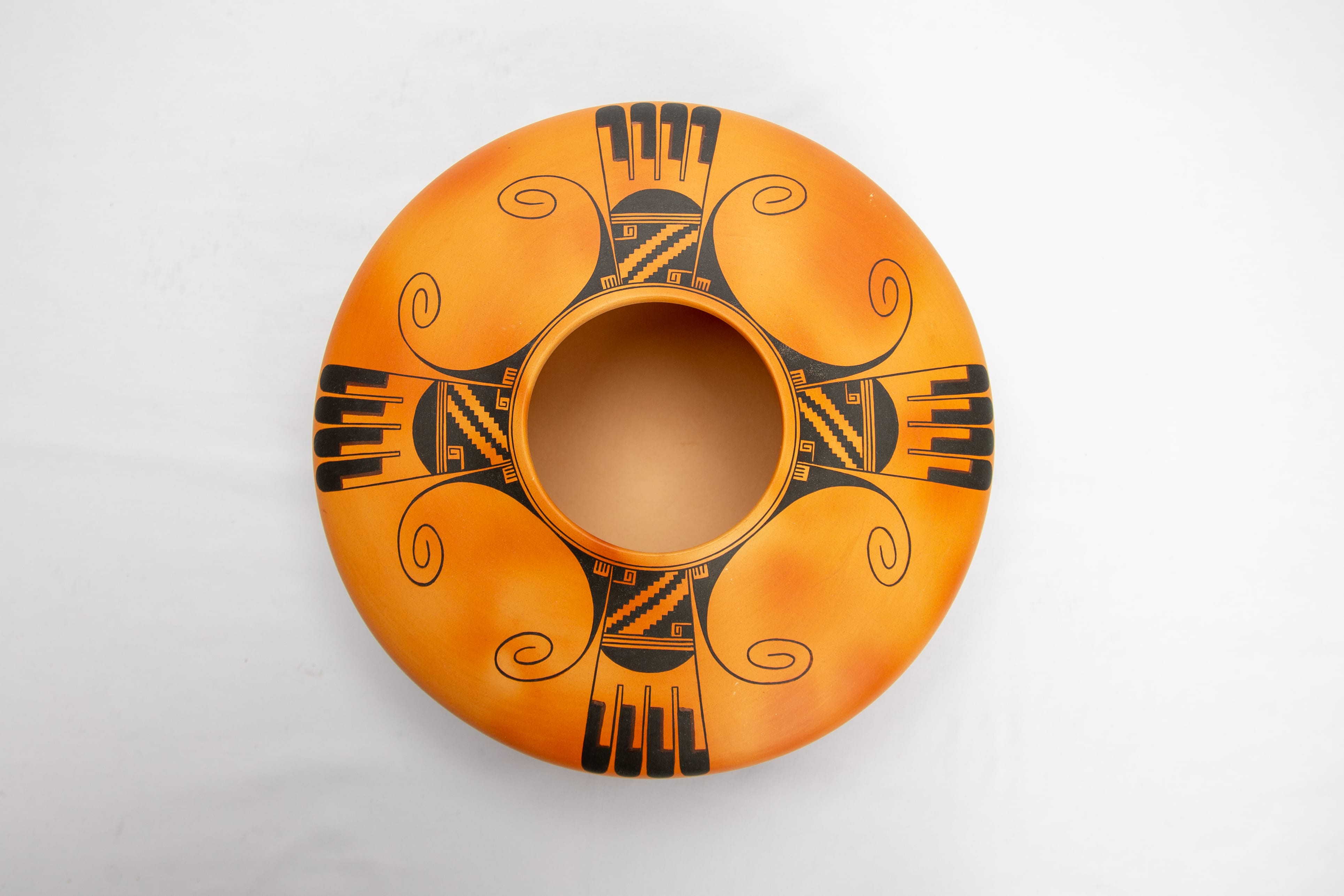
Eagle Tail Design
This one pot had two makers, two lives, several owners, and is an example of persistent beauty, a modern rendition of Nampeyo’s more casual eagle-tail jar 2005-16. As on Nampeyo’s jar, the design on 2017-09 is enlivened by 1) the contrast between...
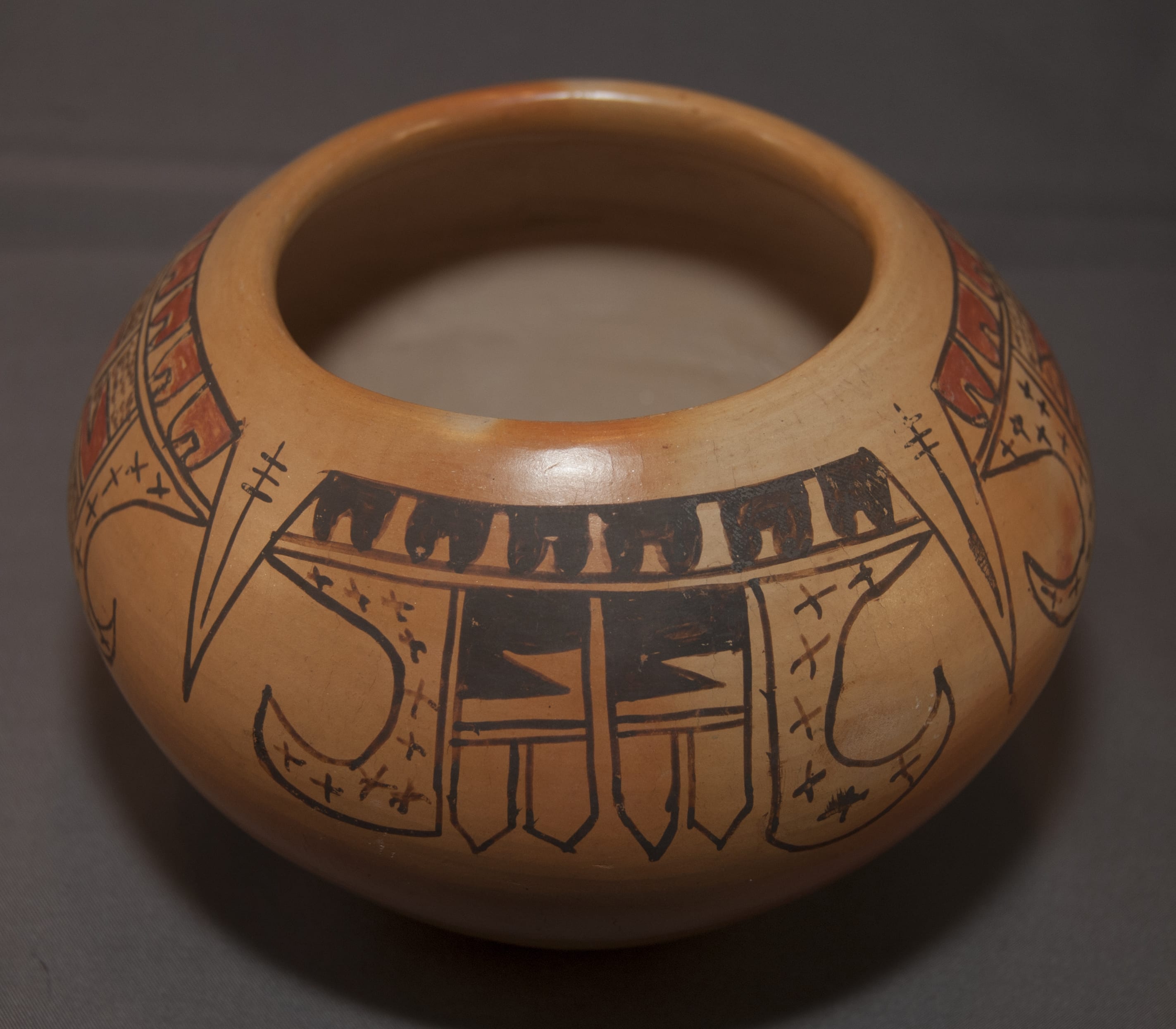
Eagle Tail Design
Attribution of Dalee as the maker of this pot is based on comparison to a similar pot in the Rick Dillingham collection (Dillingham 1994:9). There are some differences between pot 2011-20 and the Dillingham pot, but the similarities are much greater than the...
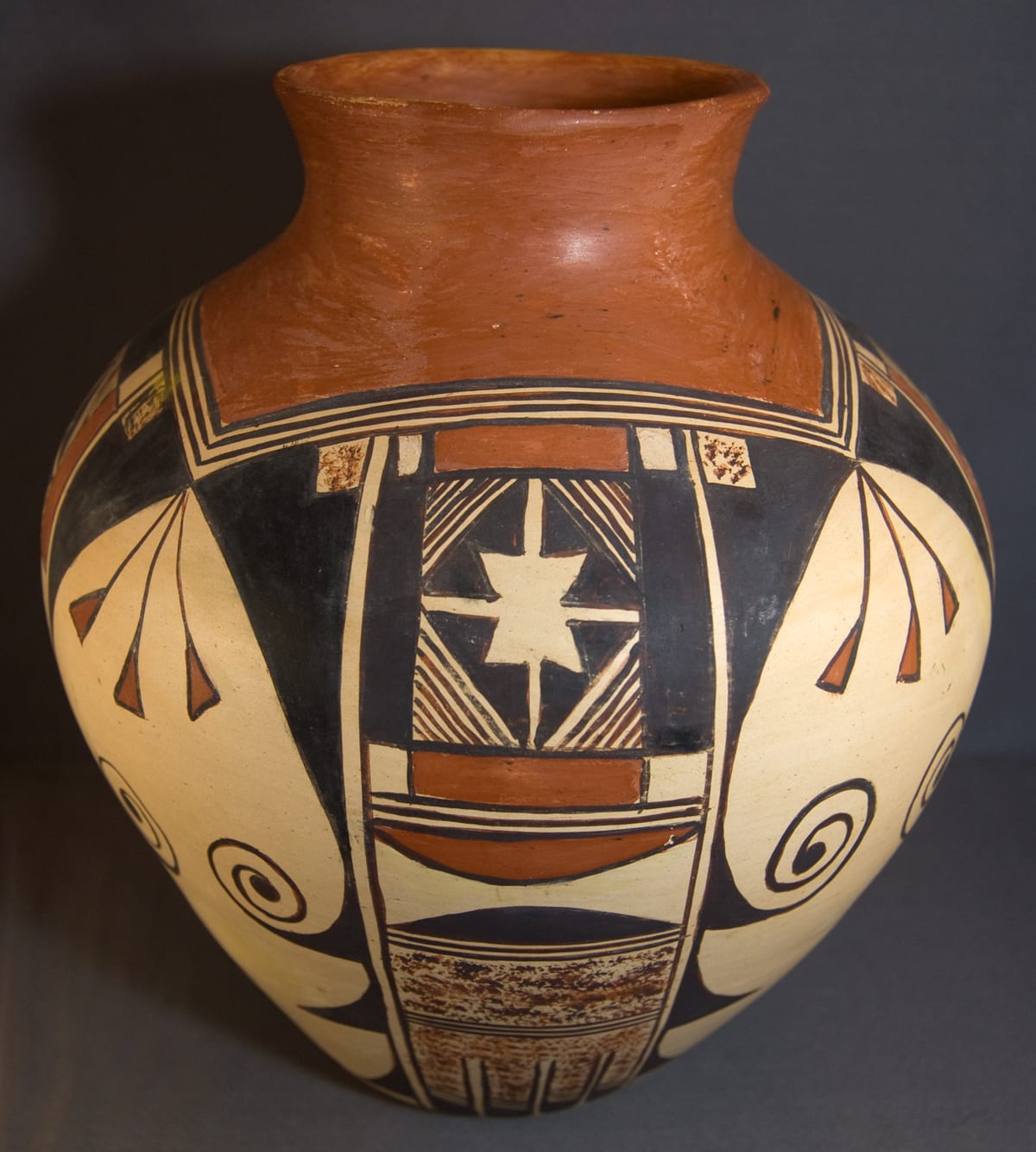
Eagle Tail Design
Vase 2011-11 is kiln-fired and thus the undecorated, unpainted areas have a pale, blank look. The four linear sections of the design above four “tails” are busy, visually crowded and somewhat static. In contrast, the four sets of curvilinear “wings” are light and...
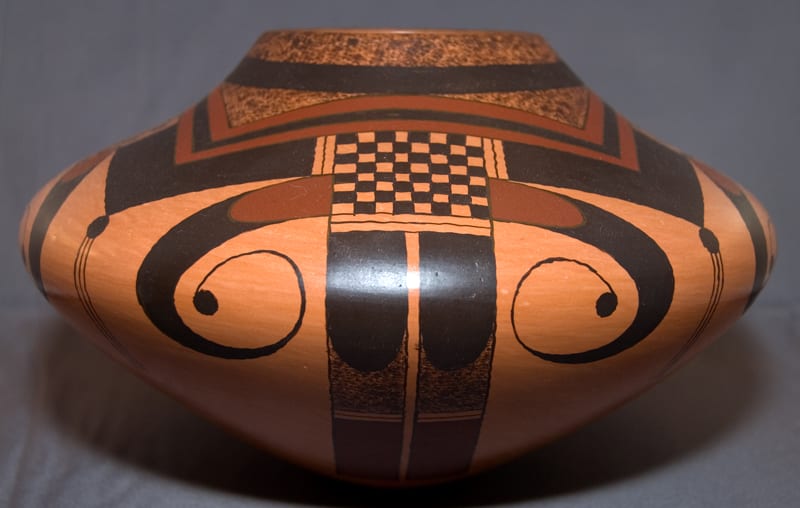
Eagle Tail Design
This pot is made with an unusual clay that fires red-tan. The color is neither as light as the grey clay that fires light tan nor as dark as the yellow clay that fires red. The pot is outdoor-fired but is not blushed. Neither is it slipped. The interior is polished...
Eagle Tail Design
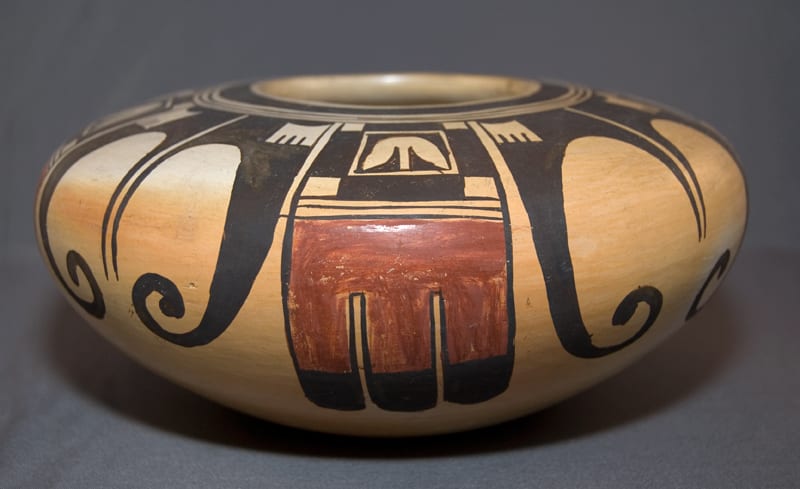
The design on this pot is especially well done, and it fits the pot perfectly. This is as fine a signed Annie pot as I have seen. When viewed from above, the monochromatic black design is particularly delicate, intricate, and perfectly balanced—a bit like a snowflake....
Eagle Tail Design
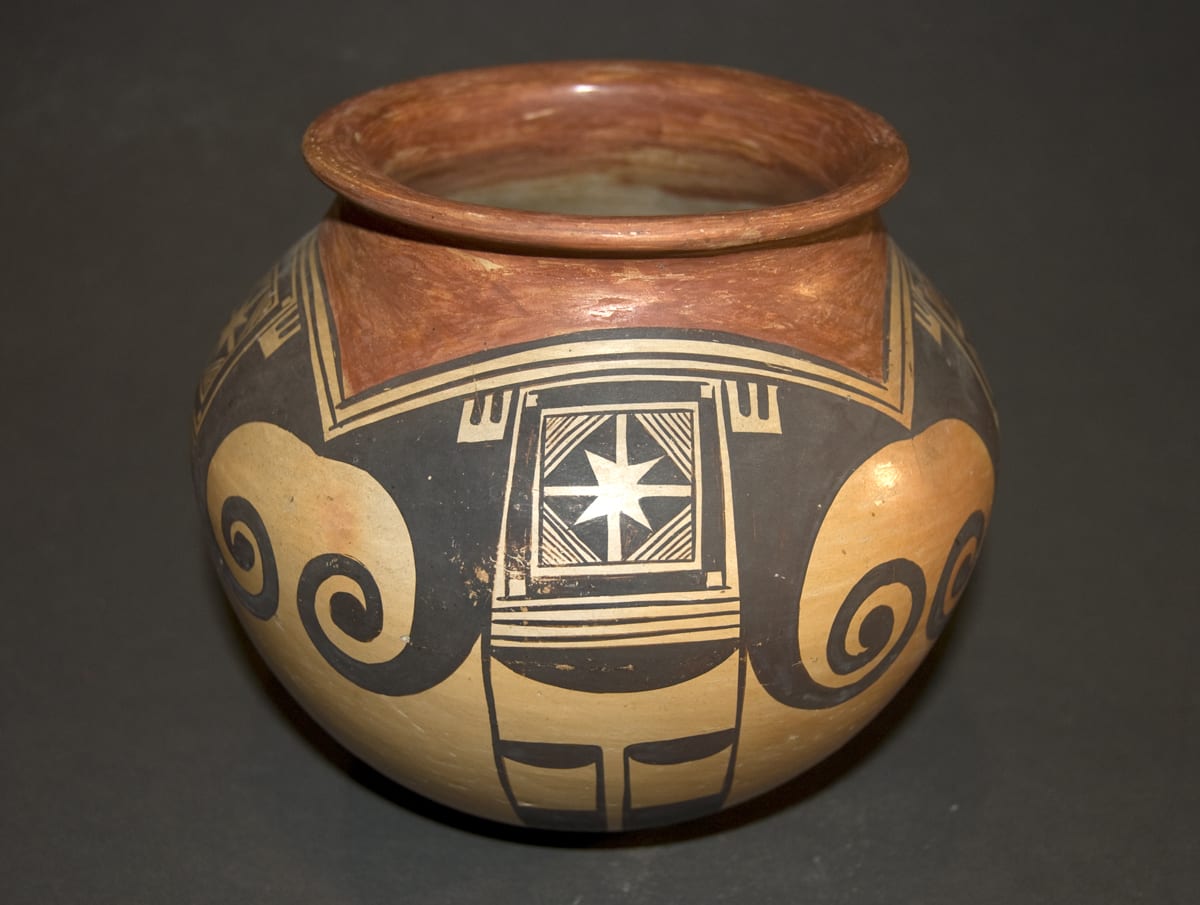
The signature on 2009-01 is exactly the same as on 2001-07 and 2009-14 and is also the same as on 2007-12, except that the latter jar was formed by Nampeyo and painted by Fannie so the two words are reversed: “Nampeyo Fannie.” All four pots were probably made in the...