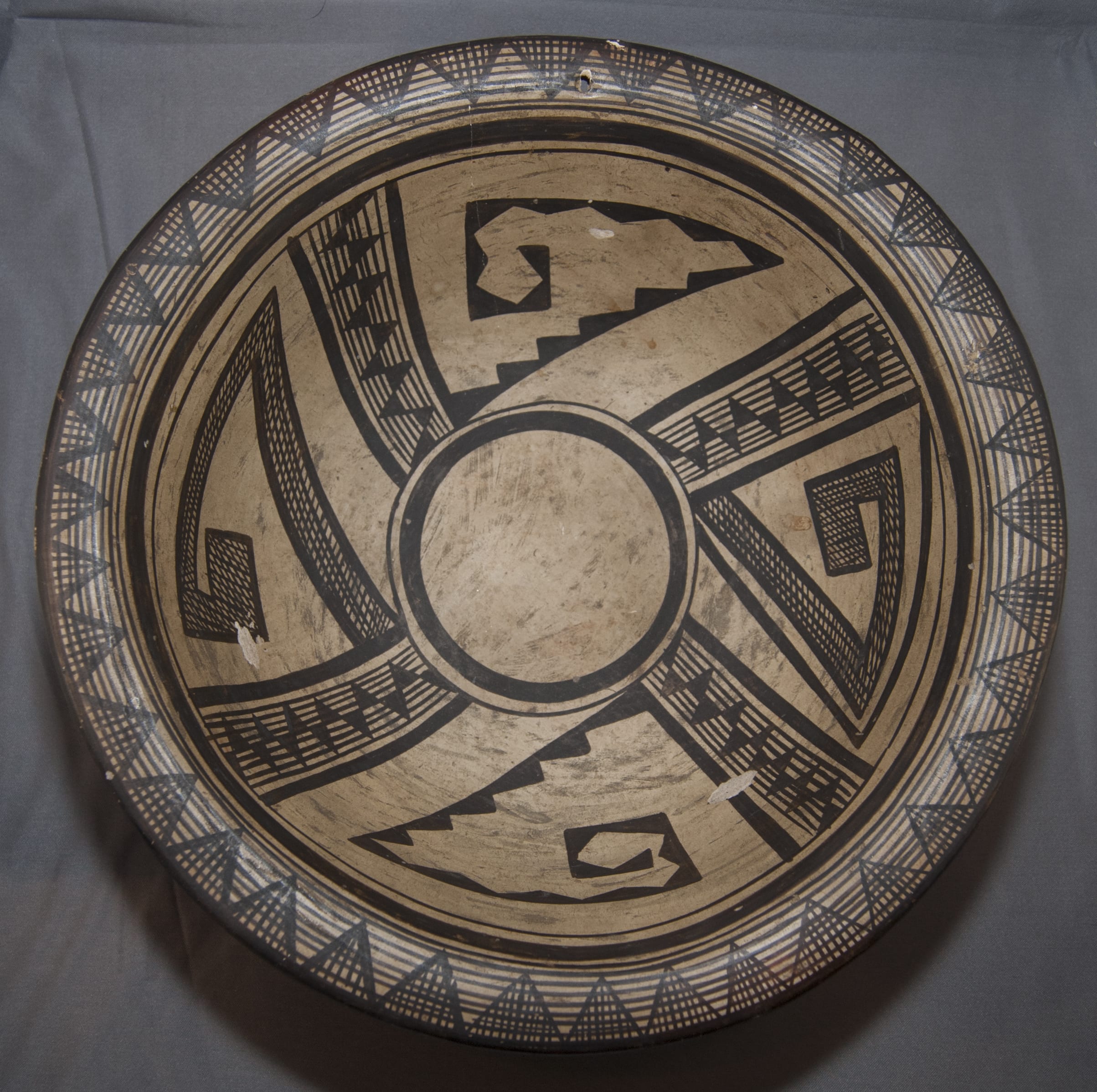
1880s to 1900 Transition Ware, White-slipped, Nampeyo
Formed ca. 1895-1900, this bowl has an unusual form, an unusual slip, an unusual design and unusually complete provenance. It is one of three known examples of pottery of this shape and design by Nampeyo. There is a well-known posed photograph of Nampeyo and Annie by...
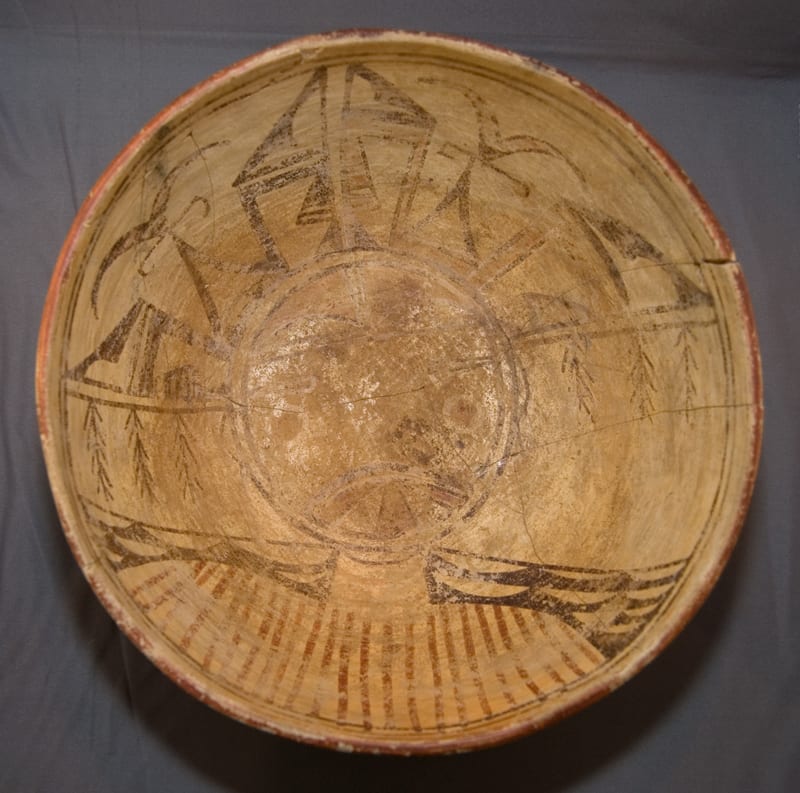
1880s to 1900 Transition Ware, Kachina Design, Polik'Mana, Utility Pots, White-slipped, Nampeyo
Walpi Polychrome Piki Bowl (repaired) with Pahlik Mana interior by Nampeyo, circa 1890. “Broken and glued with no additional plaster or overpainting. There is extensive ethnographic wear to the interior painted design from extended use as a piki bowl. The bowl bears a...
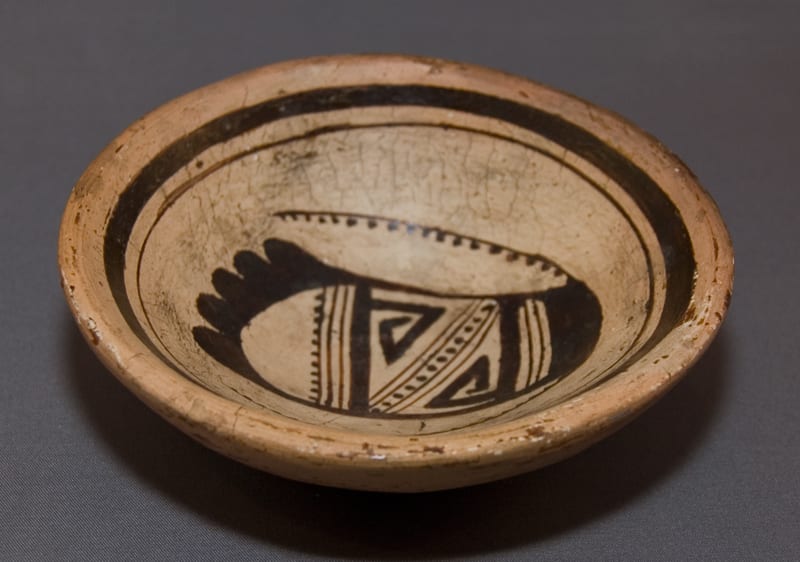
1880s to 1900 Transition Ware, Hand and Foot Design, Polacca Ware, White-slipped, Nampeyo
This small, unsigned pot has a classic Polacca crackled slip on the interior and is decorated with a monochromatic image of a foot with design elements that perhaps represent migration paths. (Note: A Pahana’s interpretation of the “meaning” of a design is dubious, at...
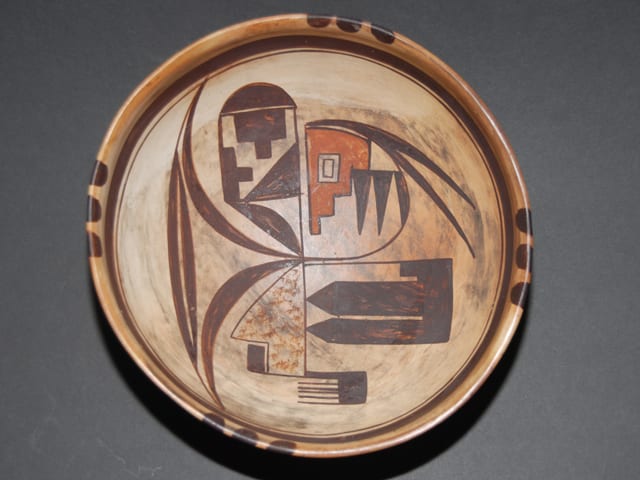
Uncategorized, White-Slip Ware, White-slipped, Nampeyo
This Hopi-Tewa bowl has an abstract geometric design, rim ticking, and an extra rim coil. The extra coil and cross-sectional shape suggests the bowl was formed by Nampeyo. During a visit to his home (4/23/09), Ed Wade said he believed that Annie was the painter. Upon...

Uncategorized, White-Slip Ware, White-slipped, Nampeyo
The design on the interior of this bowl is composed of elements that are typically used by Nampeyo; what is extraordinary is their simple, powerful configuration. Of the more than five dozen pots by Nampeyo in this collection, this bowl and two others (2014-07 and...
Uncategorized, White-Slip Ware, White-slipped, Nampeyo
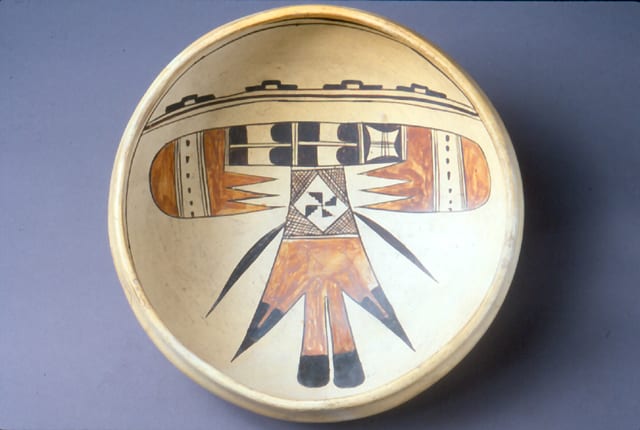
Low polychrome bowl with an everted rim and a bird tail design formed and perhaps painted by “Old Lady” Nampeyo. There is a contrary informed opinion that the bowl was painted by her daughter Annie. Note that the “3-brick” element that appears four times...